By ahmad
How Much Does Solar Battery Storage Cost UK?
Solar battery storage has become an important addition to residential solar energy systems across the UK. Homeowners are increasingly looking for ways to store electricity generated by their solar panels and use it when their properties need power most. Instead of sending all unused solar electricity back to the national grid, a battery allows households to keep a portion of that energy for evening and overnight consumption.
But how much does solar battery storage cost in UK?
In 2026, the price of a professionally installed home solar battery system generally ranges from approximately £3,000 to £7,000 for common 5kWh to 10kWh systems. Larger storage systems can cost £8,500 to £15,000 or more, depending on their capacity, technology, brand and installation requirements.
The final solar battery storage cost UK homeowners pay depends on several factors, including the amount of electricity their household consumes, the existing solar panel system, inverter compatibility and the complexity of the installation.
At Effective Eco, we recognise that every property has different energy requirements. Understanding battery capacities, installation expenses and potential savings can help you select an appropriate storage solution for your home.
What Is the Average Solar Battery Storage Cost in the UK in 2026?
The average cost of solar battery storage depends mainly on the battery’s usable capacity and the equipment required to connect it to your property’s electrical system.
A smaller battery is generally suitable for households with moderate electricity consumption, while larger batteries can store more energy for properties with higher evening demand.
The following table provides indicative 2026 UK budgeting estimates for professionally installed systems.
Solar Battery Storage Prices in the UK
| Battery capacity | Estimated installed cost | Suitable for |
|---|---|---|
| 3–5kWh | £2,500–£5,000 | Smaller households |
| 5–7kWh | £3,500–£5,500 | Small to medium homes |
| 8–10kWh | £4,500–£7,500 | Average family homes |
| 10–15kWh | £7,000–£12,000 | Larger households |
| 15–20kWh | £8,500–£15,000+ | High energy consumption |
These are indicative budgeting ranges, not guaranteed quotations. Actual prices depend on the equipment, system configuration, installer and property. Some larger systems offer a lower cost per kWh.
For example, a household with a 5kWh battery may have enough stored electricity to cover some evening appliances and lighting. A family with higher consumption may benefit from a 10kWh or larger system.
It is important to remember that battery capacity does not automatically determine how much electricity your home can use. Your actual available energy also depends on the battery’s usable capacity, charging level, inverter output and household consumption.
How Much Does a 5kWh Solar Battery Cost in the UK?
A 5kWh solar battery is a popular starting point for homeowners who want to store surplus electricity without investing in a large storage system.
In 2026, a professionally installed 5kWh battery can cost approximately £2,500 to £5,000, although prices vary depending on the manufacturer and installation arrangement.
A 5kWh battery stores up to approximately five kilowatt-hours of electricity when its full nominal capacity is available. However, the usable amount may be lower because battery manufacturers often specify operating limits to protect battery performance.
A smaller storage system may be appropriate for:
- One or two-person households.
- Properties with relatively low electricity consumption.
- Homes with smaller solar panel installations.
- Households that mainly need electricity during the evening.
- Homeowners who want to begin using battery storage with the option of expanding later.
For example, if your household uses approximately 3kWh of electricity during the evening, a suitably configured 5kWh battery may cover much of that demand, provided sufficient energy is available and the battery can deliver the required power.
How Much Does a 10kWh Solar Battery Cost in the UK?
A 10kWh solar battery offers greater storage capacity and is often considered by families with higher electricity requirements.
The estimated installed price of a 10kWh battery system in the UK is approximately £4,500 to £7,500 in 2026. Premium equipment, additional electrical work or inverter replacement can increase the overall expense.
A 10kWh system can be particularly useful for:
- Three or four-bedroom properties.
- Families with several electrical appliances.
- Homes with higher evening electricity consumption.
- Properties using electric heating or heat pumps.
- Households with home electric vehicle charging requirements.
A larger battery can store more surplus solar electricity during daylight hours and make it available when solar generation decreases.
However, buying the largest battery available is not necessarily the best financial decision. Your solar panels must generate enough surplus electricity to charge it, or you must have a suitable reason and tariff for charging it from the grid.
What Factors Affect Solar Battery Storage Installation Costs?
There is no single price for every residential battery installation. Two properties purchasing batteries with the same capacity may receive different installation quotations.
Understanding the main pricing factors can help homeowners evaluate their options.
Battery Capacity
Battery capacity is one of the biggest influences on the overall purchase price.
A 5kWh battery usually costs less than a 10kWh or 15kWh model because it stores less electricity. However, the cost per kilowatt-hour may decrease as system capacity increases.
Homeowners should select a capacity based on their daily electricity consumption, solar generation and expected future requirements.
Battery Brand and Manufacturer
Different manufacturers offer different battery technologies, warranty conditions, monitoring features and system configurations.
Some well-known residential battery brands include:
- Tesla Powerwall.
- GivEnergy.
- Fox ESS.
- Sunsynk.
- SolarEdge.
- BYD.
The manufacturer’s reputation, battery chemistry, compatibility and warranty should all be considered when comparing prices.
A cheaper battery may not necessarily offer the best long-term value if it has a shorter warranty or limited system compatibility.
Inverter Compatibility
A solar inverter converts the direct current (DC) electricity generated by solar panels into alternating current (AC) electricity used by household appliances.
When installing battery storage, the inverter must be compatible with the battery system.
Depending on the existing equipment, a homeowner may need:
- A compatible hybrid inverter.
- An additional battery inverter.
- An AC-coupled battery system.
- Inverter replacement or system modifications.
These requirements can influence the total solar battery installation cost.
Installation Labour
Professional installation involves more than simply positioning a battery.
An installer may need to inspect the electrical system, prepare the installation location, install protective equipment, connect cables, configure the battery and test the complete system.
Labour expenses can vary according to installation complexity, property layout and the amount of electrical work required.
Electrical Upgrades and Additional Equipment
Some properties require additional components before battery storage can be connected safely.
These may include:
- Electrical protection equipment.
- Battery isolators.
- Additional cabling.
- Consumer unit modifications.
- Energy monitoring equipment.
- Backup power switching equipment.
Not every installation requires all these components. A professional survey can identify the equipment needed for your property.
Installation Location
The battery installation location can also affect the quotation.
Common locations include garages, utility rooms and suitable external wall positions. The selected area must meet the manufacturer’s requirements for temperature, ventilation, access, protection and installation clearances.
A difficult installation location may require additional labour or equipment.
How Much Does It Cost to Add a Battery to Existing Solar Panels?
Homeowners who already have solar panels do not necessarily need to replace their complete solar energy system to benefit from battery storage.
A battery can often be added to an existing installation through a retrofit process.
The additional cost depends on the existing inverter, solar panel configuration, battery compatibility and electrical arrangement.
There are two common approaches.
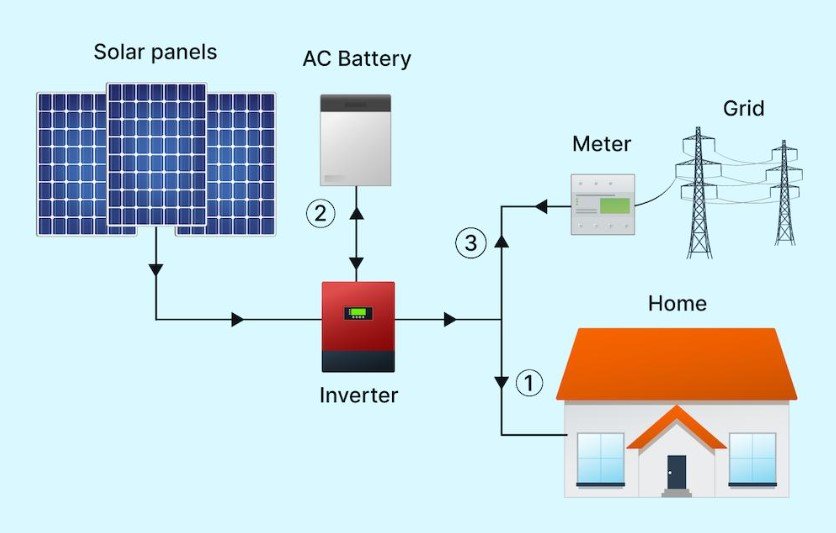
AC-Coupled Battery Installation
An AC-coupled battery connects to the property’s alternating current electrical system through its own battery inverter.
This arrangement can be useful when adding storage to an existing solar panel system, particularly when replacing the original solar inverter is not desirable.
Its benefits include:
- Compatibility with many existing solar installations.
- Flexibility when adding battery storage later.
- Independent battery charging and discharging controls.
- Potentially fewer changes to the existing solar inverter.
However, the system may involve additional conversion stages, which can affect overall energy efficiency.
DC-Coupled Battery Installation
A DC-coupled battery connects to the solar energy system on the direct current side, usually through a compatible hybrid inverter.
Solar electricity can be directed into the battery before being converted into AC electricity for household consumption.
Potential advantages include:
- Integrated solar and battery management.
- Fewer conversion stages in certain operating conditions.
- Efficient use of compatible hybrid inverter systems.
- Suitable configurations for new solar installations.
The best option depends on your existing equipment and the design of the proposed storage system.
What Is the Difference Between AC-Coupled and DC-Coupled Battery Costs?
Both configurations can provide effective residential energy storage, but their equipment and installation requirements differ.
| Feature | AC-coupled battery | DC-coupled battery |
|---|---|---|
| Connection | AC electrical side | DC solar side |
| Existing solar system | Often suitable for retrofits | Requires compatibility |
| Inverter | Usually separate battery inverter | Usually hybrid inverter |
| Installation | May involve additional components | Depends on inverter configuration |
| Best suited for | Existing solar systems | New integrated systems |
The purchase price should not be the only consideration. Homeowners should compare system efficiency, warranty, compatibility, backup features and expected electricity usage.
How Does Solar Battery Storage Work?
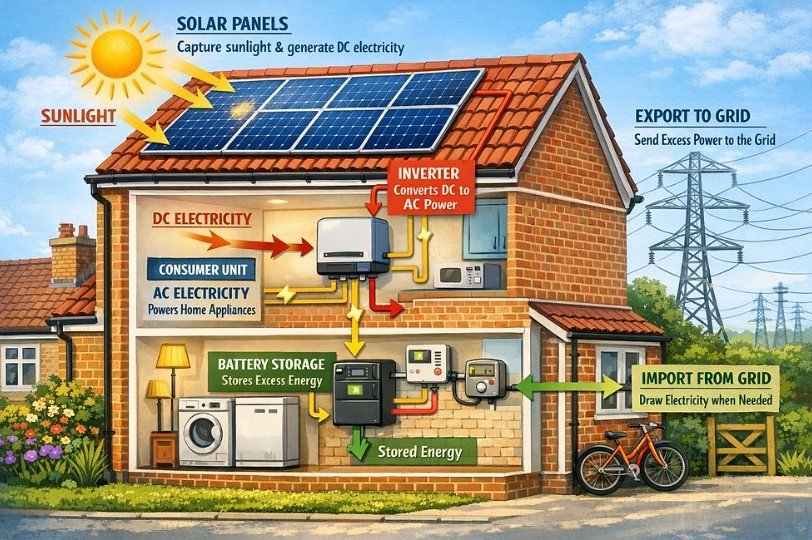
Solar battery storage captures electricity generated by solar panels and makes it available for later use.
During daylight hours, solar panels produce electricity from sunlight. Your home uses the electricity it needs, while surplus generation can charge the battery.
When solar generation decreases, stored electricity can supply household appliances.
The process generally follows four stages.
Stage 1: Solar electricity generation
Solar panels convert sunlight into direct current electricity. The inverter or hybrid inverter manages the electricity produced by the system.
Stage 2: Household electricity consumption
The generated electricity supplies appliances such as refrigerators, washing machines, lighting and electronic devices.
Stage 3: Battery charging
When solar generation exceeds immediate household demand, surplus electricity can be stored in the battery.
Stage 4: Stored energy consumption
During the evening, at night or when solar generation is insufficient, the battery supplies electricity to the property.
Depending on the battery and energy management settings, the system may also charge from the national grid during cheaper electricity periods.
What Are the Different Types of Solar Batteries Available in the UK?
Battery technology is another important consideration when comparing home battery storage prices.
Different battery chemistries offer different performance characteristics, operating requirements and costs.
Lithium Iron Phosphate (LFP) Batteries
Lithium iron phosphate batteries are widely used in residential energy storage systems.
They are known for their thermal stability, cycle life and suitability for repeated charging and discharging.
Common advantages include:
- Good cycle-life characteristics.
- Stable battery chemistry.
- High efficiency in suitable systems.
- Relatively low maintenance requirements.
LFP batteries are an increasingly popular choice for modern residential solar installations.
Lithium Nickel Manganese Cobalt (NMC) Batteries
NMC batteries use nickel, manganese and cobalt in their cathode chemistry.
They offer high energy density, meaning they can store a relatively large amount of electricity within a compact physical size.
They may be suitable for properties where available installation space is limited.
However, battery safety, thermal management, warranty and installation specifications should be evaluated before selecting this technology.
Lead-Acid Batteries
Lead-acid batteries are an older energy storage technology that has been used in off-grid and backup power applications.
They can have a lower initial purchase price in some applications, but typically have lower usable depth of discharge and shorter cycle life than modern lithium systems.
For many new residential solar installations, lithium-based storage offers a more practical long-term solution.
How Much Money Can You Save with Solar Battery Storage?
One of the main reasons homeowners consider solar battery storage is the potential to reduce electricity bills.
However, the amount saved depends on how the battery is used, the household’s electricity consumption, solar generation and electricity tariff.
For example, a home without battery storage may export surplus electricity generated during the day and purchase electricity from the grid during the evening.
With battery storage, some of that daytime surplus can be stored and used later.
Example of Potential Electricity Savings
Consider a household with the following energy usage:
| Energy information | Example |
|---|---|
| Daily household electricity use | 10kWh |
| Solar electricity generated | 15kWh |
| Direct daytime solar consumption | 5kWh |
| Potential surplus generation | 10kWh |
| Evening electricity requirement | 5kWh |
Without battery storage, the household may export much of its surplus electricity.
With a suitable battery, some of the surplus can be stored and used to cover the evening electricity requirement.
This can reduce the amount of electricity purchased from the grid.
However, the actual financial benefit depends on the difference between the electricity import price and export payment, battery charging and discharging losses, and how much energy the battery can store.
A battery does not automatically eliminate electricity bills or guarantee a particular annual saving.
Is Solar Battery Storage Worth It in UK?
Solar battery storage can be a worthwhile investment for households that generate surplus solar electricity during the day but consume more electricity during the evening.
Whether it makes financial sense depends on the relationship between installation costs, electricity prices, export payments and battery performance.
Benefits of Installing Solar Battery Storage
1. Reduced Electricity Bills
A battery allows homeowners to use stored solar electricity instead of purchasing as much electricity from their energy supplier.
2. Better Use of Solar Energy
Without a battery, unused solar electricity may be exported to the grid. Battery storage allows households to retain more of their own generated electricity.
3. Greater Energy Independence
Storing electricity can reduce dependence on the national grid, particularly during periods when solar generation is sufficient.
4. Flexible Electricity Tariffs
Some battery systems can charge from the grid during cheaper off-peak periods and supply electricity when prices are higher.
5. Integration with Electric Vehicles
Homeowners with electric vehicles can coordinate battery charging and home energy consumption to make better use of available electricity.
6. Support for Heat Pump Systems
Battery storage can work alongside air source heat pumps and other electric heating technologies, although the system must be sized according to the property’s energy requirements.
Possible Disadvantages to Consider
Solar batteries also have some limitations:
- High initial installation costs.
- Limited energy storage capacity.
- Energy losses during charging and discharging.
- Battery degradation over time.
- Additional replacement costs during the solar panel system’s lifetime.
- Reduced financial benefits if the battery is regularly underused.
The best investment is not necessarily the largest battery. It is the system that matches your property’s electricity requirements and offers a reasonable financial return.
How Long Does a Solar Battery Last?
Most modern residential lithium-ion solar batteries have an expected service life of approximately 10–15 years, although actual performance depends on battery chemistry, operating temperature, usage patterns and maintenance.
Many manufacturers provide warranties of around 10 years, but the specific terms differ between products.
A battery warranty may include conditions relating to:
- Maximum charging and discharging cycles.
- Remaining usable capacity.
- Energy throughput.
- Operating temperature.
- Installation requirements.
Battery capacity gradually decreases as the system ages. This means a battery that initially stores 10kWh may provide less usable energy after several years of operation.
When comparing solar battery storage prices, consider the warranty and expected lifetime alongside the purchase price.
How to Choose the Right Solar Battery Capacity for Your Home
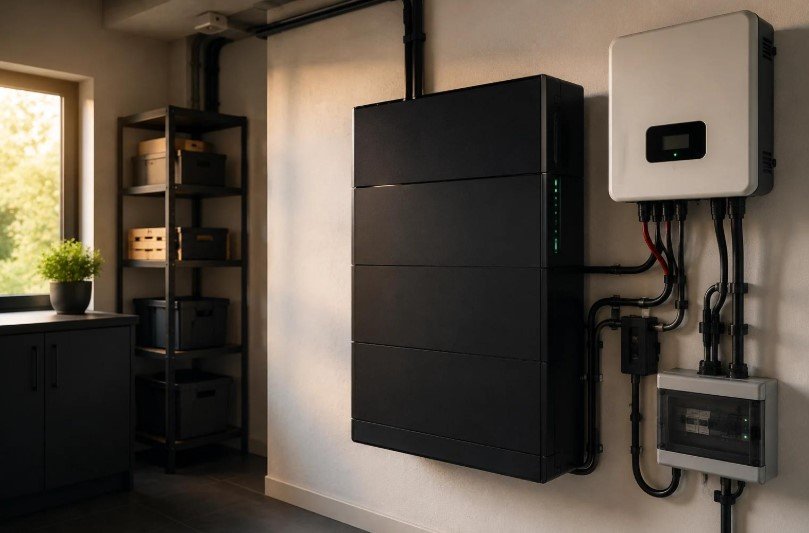
Selecting the correct battery capacity is essential for controlling installation costs and getting practical value from your storage system.
A battery that is too small may not provide enough electricity for your evening requirements. A battery that is unnecessarily large may increase the initial investment without delivering proportionate savings.
Consider the following factors.
Your Daily Electricity Consumption
Review your electricity bills to understand how much energy your household uses each day.
Also identify when electricity consumption is highest. A household that uses most of its electricity in the evening may benefit more from battery storage than a property that consumes most of its solar electricity during daylight hours.
Your Solar Panel Generation
Your battery should be compatible with the amount of surplus electricity generated by your solar panels.
For example, a large battery may not regularly reach full charge if your solar panel system produces limited surplus energy.
Your Household Size
Household size can provide an initial indication of electricity demand, although appliance usage and lifestyle are equally important.
| Household requirements | Potential battery capacity |
|---|---|
| Small household | 3–5kWh |
| Small family | 5–7kWh |
| Average family home | 8–10kWh |
| Larger household | 10–15kWh |
| High electricity demand | 15–20kWh+ |
These are starting points rather than fixed recommendations. A proper assessment should use actual consumption and solar generation data.
Future Energy Requirements
If you plan to purchase an electric vehicle, install an air source heat pump or add other electrical appliances, your future energy demand may increase.
Discussing these plans with your installer can help determine whether a larger or expandable battery system would be more suitable.
Is Solar Battery Storage VAT-Free in UK?
VAT is an important consideration when calculating the total cost of residential battery storage.
Under the UK rules applicable in November 2026, qualifying installation of energy-saving materials in residential accommodation benefits from a 0% VAT rate until 31 March 2027.
Battery storage is included within the relevant energy-saving materials provisions. However, eligibility depends on the nature of the supply, property and installation arrangement.
From 1 April 2027, the standard planned VAT treatment is a reduced 5% rate, subject to the rules and any subsequent legislative changes.
Homeowners should ask their installer to confirm the applicable VAT treatment and whether the quotation includes all eligible equipment and installation work.
This can make a difference when comparing quotations from different installers.
Can You Charge a Solar Battery from the National Grid?
Yes. Many modern home battery storage systems can charge using electricity from the national grid as well as electricity generated by solar panels.
This feature can be particularly useful when a household has access to a time-of-use electricity tariff.
For example, a homeowner may charge their battery overnight when electricity prices are lower and use the stored electricity during more expensive periods.
This approach is sometimes called grid charging or off-peak battery charging.
However, not every battery system offers the same charging controls. Homeowners should check whether their battery, inverter and energy management software support the required tariff integration.
It is also important to calculate the charging cost, efficiency losses and tariff differences before assuming that grid charging will produce savings.
Can Solar Battery Storage Work During a Power Cut?
Some solar battery systems can provide backup electricity during a power outage, but this feature is not automatically included in every installation.
Standard grid-connected solar systems generally disconnect from the grid during an outage to protect utility workers and comply with electrical safety requirements.
To provide electricity during a power cut, a battery installation may require:
- Backup power functionality.
- Suitable inverter compatibility.
- An automatic or manual transfer arrangement.
- Dedicated backup circuits.
- Appropriate electrical protection.
The available backup power also depends on the battery’s remaining charge and inverter output capacity.
For example, a battery may have enough stored energy to power essential lighting, refrigeration and selected appliances, but not necessarily the entire property at once.
If backup electricity is important to your household, request a system designed specifically for that requirement.
How to Reduce Your Solar Battery Installation Costs
Homeowners can take several practical steps to manage their initial investment without compromising system safety or performance.
Install solar panels and battery storage together
If you are planning a new solar installation, requesting a combined quotation may reduce duplicated labour and equipment expenses.
Compare multiple installation quotations
Obtain detailed quotations from reputable installers. Compare the battery model, usable capacity, inverter, warranty, installation work and final price.
Choose the correct battery capacity
Avoid purchasing more storage than your household can reasonably use or charge.
Check existing inverter compatibility
If you already have solar panels, ask whether your current inverter can work with a battery before purchasing replacement equipment.
Review available electricity tariffs
A suitable time-of-use tariff may improve the financial value of battery storage, depending on the charging and discharging schedule.
Check available finance options
Ask about payment plans, finance arrangements and any applicable government-backed schemes. Always review the interest rate, eligibility requirements and repayment conditions.
Why Choose Effective Eco for Solar Battery Storage?
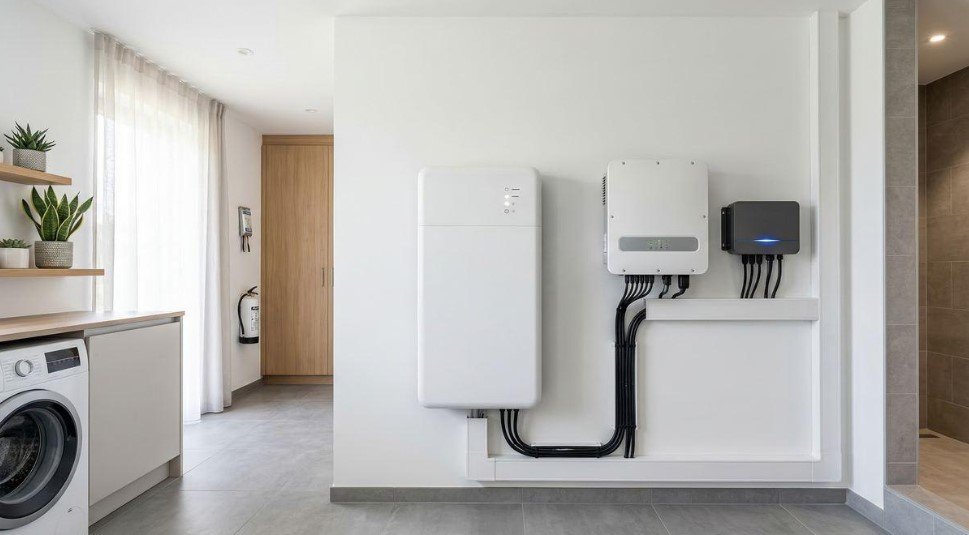
Choosing a suitable battery storage system requires more than comparing equipment prices. Homeowners need a solution that works with their existing electricity infrastructure, solar panel generation and future energy requirements.
Effective Eco provides renewable energy solutions for UK properties, helping homeowners consider solar energy and battery storage options according to their individual requirements.
When planning a battery installation, important considerations include:
- Battery Capacity Assessment: Identifying an appropriate storage size based on household electricity consumption.
- Solar System Compatibility: Checking the relationship between existing solar panels, inverters and battery equipment.
- Energy Storage Solutions: Considering suitable residential battery storage technologies.
- Installation Planning: Assessing the property and electrical requirements before installation.
- Energy Management: Understanding how stored solar electricity can be used throughout the day.
- Future Energy Requirements: Considering electric vehicles, heat pumps and additional household electricity demand.
Whether you are planning a new solar panel installation or considering adding battery storage to an existing system, Effective Eco can help you explore suitable renewable energy options.
Contact Effective Eco to discuss your property’s energy requirements and request information about solar battery storage installation in the UK.
Conclusion: Is Solar Battery Storage a Good Investment in 2026?
The solar battery storage cost UK homeowners face in 2026 depends on battery capacity, technology, manufacturer, inverter compatibility and installation requirements.
A typical 5kWh to 10kWh residential battery installation can cost approximately £3,000 to £7,500, while larger systems may require a higher initial investment.
Although battery storage involves an upfront expense, it can help households use more of their own solar electricity, reduce grid electricity purchases and make better use of time-of-use energy tariffs.
Before choosing a battery, consider your household’s daily electricity consumption, solar generation, evening demand and future energy requirements.
A professionally assessed system can help you select the right storage capacity and avoid spending money on unnecessary equipment.
Effective Eco helps UK homeowners explore solar energy and battery storage solutions designed around their property and electricity needs.
FAQs – Solar Battery Storage Costs UK
1. How much does solar battery storage cost in the UK in 2026?
Solar battery storage generally costs between £3,000 and £7,500 for common residential systems of approximately 5kWh to 10kWh. Larger systems can cost £8,500 to £15,000 or more, depending on capacity, equipment and installation requirements.
2. How much does a 5kWh solar battery cost in the UK?
A 5kWh solar battery installation typically costs approximately £2,500 to £5,000. The final price depends on the battery manufacturer, inverter compatibility, installation complexity and warranty.
3. How much does a 10kWh solar battery cost in the UK?
A professionally installed 10kWh battery generally costs between £4,500 and £7,500. Premium battery models and additional electrical upgrades may increase the total installation price.
4. Is solar battery storage worth it in the UK?
Yes, solar battery storage can be worthwhile for households that generate surplus solar electricity during the day and use more electricity during the evening. It can reduce grid electricity purchases and increase the use of renewable energy generated at home.
5. How many solar batteries does a house need?
The number of batteries depends on household electricity consumption, solar panel generation and the storage capacity of each battery. Many homes can operate with one appropriately sized battery, while larger properties may require multiple units.
6. How long does a home solar battery last?
Most modern residential lithium-ion batteries have an expected lifespan of approximately 10–15 years. Their actual lifespan depends on battery chemistry, charging cycles, operating conditions and manufacturer warranty terms.
7. Can I add battery storage to my existing solar panels?
Yes. Many existing solar panel systems can be upgraded with battery storage. An installer will need to check inverter compatibility, electrical configuration and whether an AC-coupled or DC-coupled battery is more suitable.
8. Does solar battery storage work at night?
Yes. A solar battery stores electricity generated during daylight hours and supplies that stored energy when solar panels are not generating electricity, including during the evening and night.
9. Can a solar battery reduce electricity bills?
Yes. A solar battery can reduce electricity bills by storing surplus solar electricity for later household consumption. The actual savings depend on energy consumption, electricity tariffs, export rates and battery efficiency.
10. Can solar batteries be charged from the national grid?
Yes. Many modern battery systems support grid charging. Homeowners can potentially charge their batteries during cheaper electricity periods and use the stored electricity when grid prices are higher.
11. Do solar batteries work during power cuts?
Some solar batteries provide backup electricity during power cuts. However, the system must have compatible backup functionality, suitable inverter equipment and appropriate electrical connections.
12. Is solar battery installation VAT-free in the UK?
Qualifying residential solar battery storage installations currently benefit from 0% VAT until 31 March 2027. Eligibility depends on the applicable UK VAT rules and installation arrangements.
13. What size solar battery is best for a three-bedroom house?
An 8kWh to 10kWh battery may be a suitable starting point for some three-bedroom homes. However, the correct size depends on actual electricity consumption, solar generation and evening energy requirements.
14. Which battery technology is best for home solar storage?
Lithium iron phosphate (LFP) is a popular choice for residential energy storage because of its thermal stability and cycle-life characteristics. The best option also depends on price, usable capacity, warranty and system compatibility.
15. Can I install solar battery storage without solar panels?
Yes. Certain battery systems can charge directly from the national grid using suitable electricity tariffs. However, if your primary objective is to store renewable electricity generated at home, you will need a compatible solar panel system.