By Effective Eco

Solar Panels vs Traditional Electricity
Electricity is an essential part of everyday life in the UK. From lighting and heating systems to kitchen appliances, computers, electric vehicles and business equipment, most households depend on a reliable electricity supply. However, increasing energy expenses have encouraged homeowners and businesses to look for alternative ways to generate and manage their electricity.
One option gaining attention is solar energy. Instead of purchasing all their electricity from an energy supplier, property owners can install solar photovoltaic (PV) panels to generate electricity from sunlight and use it within their buildings.
This creates an important question: Are solar panels cheaper than traditional electricity, and how much money can you save by switching to solar power?
When comparing solar panels vs traditional electricity, it is important to consider more than the initial installation price. Traditional electricity requires ongoing payments for every unit consumed, while solar panels involve an upfront investment that can reduce the amount of electricity purchased from the grid over many years.
Solar systems can also provide additional financial benefits through battery storage and payments for surplus electricity exported to the national grid.
In this article, Effective Eco explains how solar energy compares with traditional electricity in terms of installation costs, monthly bills, maintenance, long-term savings, environmental impact and overall value for UK properties.
What Is Traditional Electricity?
Traditional electricity refers to the power supplied to homes and businesses through the national electricity grid. Electricity suppliers purchase power from different generation sources and deliver it through transmission and distribution networks.
The UK electricity supply includes several sources, such as:
- Natural gas power stations.
- Nuclear power generation.
- Wind energy.
- Hydroelectric power.
- Solar electricity.
- Other renewable and conventional generation sources.
Although renewable energy already contributes to the national electricity supply, most consumers still purchase electricity through an energy supplier rather than generating all the power they need themselves.
How Traditional Grid Electricity Works
When you switch on an appliance, electricity travels from the national grid through the local distribution network and into your property.
Your electricity meter records the amount of energy consumed, usually measured in kilowatt-hours (kWh). Your energy supplier then calculates your bill using your electricity tariff and applicable standing charges.
The main characteristics of traditional electricity include:
- Ongoing electricity payments: You pay for the electricity consumed from your supplier.
- Grid dependence: Your property relies on the electricity network for its normal supply.
- Variable tariffs: Your unit rate may change depending on your energy contract and tariff.
- Standing charges: Most standard grid connections include a daily charge, even when electricity consumption is low.
- Convenient supply: Electricity is generally available whenever the grid is operating and your property has a functioning connection.
Traditional electricity offers convenience, but households have limited control over the generation cost of the electricity they purchase.
What Are Solar Panels and How Do They Generate Electricity?
Solar panels are renewable energy devices that convert sunlight into usable electrical power. Most residential installations use solar photovoltaic (PV) technology.
Solar panels contain photovoltaic cells, commonly manufactured using silicon. When sunlight reaches these cells, it creates an electrical current that can be converted into electricity for household or commercial use.
Unlike conventional electricity generation, solar PV systems do not require fuel combustion to generate electricity.
How a Solar Energy System Works
A typical grid-connected solar installation includes several components:
- Solar panels: Capture sunlight and produce direct current (DC) electricity.
- Solar inverter: Converts DC electricity into alternating current (AC) electricity suitable for household appliances.
- Electrical distribution system: Delivers the generated electricity to the property’s circuits.
- Smart meter or generation monitoring: Helps measure electricity imported from or exported to the grid.
- Solar battery storage (optional): Stores surplus solar electricity for use when panels are generating less power.
What Happens When Solar Panels Generate More Electricity Than You Need?
When your solar system produces more electricity than your property consumes, surplus power can be exported to the national grid.
Under the UK’s Smart Export Guarantee (SEG), eligible households can receive payments from participating electricity suppliers for exported electricity.
Alternatively, a solar battery can store some of this excess generation for later use, such as during the evening or overnight.
This means solar energy can reduce grid electricity purchases while potentially creating an additional income stream through export payments.
Solar Panels vs Traditional Electricity: Main Differences
Solar electricity and traditional grid electricity serve the same basic purpose: providing power to homes and businesses. However, their generation methods, payment structures and long-term financial benefits are different.
| Comparison Factor | Solar Panels | Traditional Electricity |
|---|---|---|
| Energy source | Sunlight | Mixed national generation sources |
| Initial investment | Installation cost required | No solar installation investment |
| Electricity generation | On-site | Centralised generation |
| Monthly electricity bills | Can be reduced | Based on purchased electricity |
| Fuel requirement | No purchased fuel | Depends on generation mix |
| Maintenance | Periodic system checks | Supplier maintains network infrastructure |
| Energy storage | Optional solar battery | Electricity supplied through the grid |
| Export opportunities | SEG payments may be available | Not applicable to ordinary consumers |
| Environmental impact | Low operational emissions | Depends on electricity generation mix |
| Energy independence | Reduces grid dependence | Relies on grid supply |
The biggest difference is the financial structure. Traditional electricity generally involves continuous consumption-based payments, whereas solar panels allow property owners to generate a portion of their electricity themselves after paying for installation.
Solar Panel Installation Cost in the UK
The initial installation cost is one of the most important factors when comparing solar panels with traditional electricity.
Unlike a standard grid electricity connection, solar panels require an upfront investment in equipment, installation and electrical components.
However, this investment can provide financial returns through reduced electricity purchases over the system’s working life.
According to the Energy Saving Trust, an average domestic solar PV installation of approximately 4.5 kWp costs around £7,600 in the UK. Actual prices depend on system capacity, roof conditions, equipment specifications and installation requirements. Energy Saving Trust+1
Estimated Solar Panel Installation Costs
The following figures are indicative budgeting ranges, not guaranteed installer quotations.
| Solar System Size | Estimated Installation Budget | Typical Application |
|---|---|---|
| 3 kW | £5,000–£6,500 | Smaller households |
| 4 kW | £6,000–£8,000 | Average-sized homes |
| 5 kW | £7,500–£9,500 | Larger households |
| 6 kW | £9,000–£11,500 | High electricity consumption |
Indicative planning estimates. Actual prices vary by property, installer, equipment and installation complexity.
What Determines Solar Panel Installation Costs?
Several factors influence the total cost of installing a solar energy system.
1. Solar Panel Capacity
A larger system generally requires more panels, mounting equipment and electrical components. However, the cost per kilowatt can decrease as system size increases.
2. Solar Panel Quality
Different panels offer different efficiency ratings, warranties, performance characteristics and physical dimensions. Higher-efficiency panels may be useful where roof space is limited.
3. Roof Condition and Accessibility
Roof orientation, pitch, shading, structural condition and installation access can affect labour and equipment requirements.
4. Solar Inverter
The inverter is an essential part of a solar installation. Its capacity, technology, efficiency and compatibility with battery storage influence the overall system cost.
5. Battery Storage
Adding a solar battery increases the initial investment but allows households to store surplus electricity and use more of their own solar generation later.
6. Installation Requirements
Scaffolding, electrical upgrades, additional cabling and distribution board modifications can affect the final quotation.
Is Solar Installation VAT-Free in the UK?
At the time of writing, qualifying residential solar panel installations in Great Britain benefit from a zero-rate VAT arrangement that runs until 31 March 2027. The applicable VAT treatment should be checked for the specific installation and any additional products or services. SolarPanelCosts+1
Read More About; How Much Do Solar Panels Cost in UK in 2026?
How Much Does Traditional Electricity Cost in the UK?
Traditional electricity does not normally require a separate solar installation investment, but consumers pay for every unit of electricity purchased from their supplier.
The amount you spend depends on:
- Household electricity consumption.
- Electricity unit rate.
- Daily standing charge.
- Energy supplier and tariff.
- Time of electricity usage.
- Regional pricing differences.
For example, Ofgem’s average electricity rate for Direct Debit customers on default tariffs was 26.32p per kWh between 1 October and 31 December 2026. The average daily electricity standing charge was 54.83p. Actual rates vary by region and payment method. Ofgem+1
Example of Traditional Electricity Expenses
Consider a household that consumes 3,500 kWh of electricity annually.
Using the October–December 2026 average unit rate:
- Annual electricity consumption: 3,500 kWh.
- Electricity unit rate: £0.2632.
- Annual consumption cost: £921.20.
- Daily standing charge: approximately £200.13 annually.
Illustrative annual electricity cost
£1,121.33
Including the average standing charge, before any other adjustments or discounts.
This calculation assumes the same electricity rate and standing charge throughout the year. It is an illustration, not a forecast of future bills.
The important point is that electricity expenses continue for as long as the household purchases power from its supplier.
Solar Panels vs Traditional Electricity: Monthly Bills Comparison
One of the biggest reasons homeowners consider solar panels is the opportunity to reduce their monthly electricity bills.
With traditional electricity, households purchase most of their electricity from an energy supplier. With solar panels, some of that electricity can be generated directly on the property.
The amount saved depends on how much electricity the solar system produces and how much of that electricity the household uses.
Example: Monthly Electricity Expenses
Consider a household with an average monthly electricity consumption of approximately 292 kWh.
Using the October–December 2026 Ofgem average electricity rate of 26.32p per kWh:
| Expense | Traditional Electricity |
|---|---|
| Monthly consumption | 292 kWh |
| Electricity rate | £0.2632/kWh |
| Monthly electricity usage cost | £76.85 |
| Monthly standing charge | £16.68 |
| Total monthly cost | £93.53 |
Now consider a property with solar panels that supplies 60% of its annual electricity consumption directly from solar generation.
| Expense | Solar-Assisted Property |
|---|---|
| Monthly electricity consumption | 292 kWh |
| Electricity supplied by solar | 175 kWh |
| Electricity purchased from grid | 117 kWh |
| Grid electricity cost | £30.79 |
| Monthly standing charge | £16.68 |
| Total monthly grid bill | £47.47 |
Illustrative calculation using a constant unit rate and standing charge. It excludes solar installation finance, maintenance and export income.
Illustrative monthly bill comparison
Traditional electricity
£93.53
Solar-assisted electricity
£47.47
Potential monthly bill reduction
£46.06
49.3% lower
This example demonstrates how generating electricity on-site can reduce the amount purchased from an energy supplier.
However, solar panels do not automatically eliminate electricity bills. Most grid-connected households continue paying standing charges and may need to purchase electricity during periods of low solar generation.
How Much Money Can You Save with Solar Panels?
The financial savings from solar panels depend on several factors, including the property’s electricity consumption, solar generation capacity, location and daily energy habits.
A solar installation can provide savings in three main ways.
1. Reduced Electricity Purchases
Solar panels generate electricity that can be used directly by household appliances.
For example, when your solar system generates electricity during daylight hours, you can use that power for:
- Washing machines and tumble dryers.
- Dishwashers.
- Refrigerators and freezers.
- Computers and televisions.
- Lighting and household electronics.
- Electric vehicle charging.
- Other electrical appliances.
Every unit of solar electricity consumed directly is a unit that does not need to be purchased from the grid.
2. Payments for Exported Electricity
When solar panels produce more electricity than the household needs, the surplus can be exported to the national electricity grid.
Eligible households in Great Britain can receive payments through the Smart Export Guarantee (SEG).
The export payment depends on the electricity supplier, tariff conditions and amount of electricity exported. Ofgem explains that participating suppliers determine their own SEG rates and contract terms. Ofgem+1
This gives solar panel owners an additional opportunity to recover part of their initial installation investment.
3. Protection Against Future Electricity Price Changes
Traditional electricity consumers remain exposed to changes in energy tariffs.
Solar panels can reduce this exposure by allowing property owners to generate some of their electricity independently.
For example, if grid electricity prices increase, the financial value of each unit of solar electricity used at home also increases, assuming other factors remain unchanged.
However, solar panels do not protect consumers against every energy expense because they may still need grid electricity, and standing charges continue to apply.
Solar Panels vs Traditional Electricity: Long-Term Cost Comparison

When comparing the two electricity options, it is important to look at the total cost over several years rather than focusing only on the first installation payment.
Traditional electricity involves recurring payments, whereas solar panels require an initial investment followed by ongoing savings and some maintenance expenses.
Example of a 10-Year Electricity Cost Comparison
Consider a household with annual electricity consumption of 3,500 kWh.
For illustration, assume:
- Grid electricity rate: 26.32p per kWh.
- Annual consumption: 3,500 kWh.
- Solar installation cost: £7,600.
- Solar electricity used directly: 1,800 kWh annually.
- Solar electricity exported: 1,500 kWh annually.
- Illustrative export payment: 12p per kWh.
- Electricity tariffs remain unchanged throughout the calculation.
The 12p export assumption is an example, not a guaranteed SEG rate.
Traditional electricity calculation
Annual consumption cost:
3,500 × £0.2632 = £921.20
Ten-year consumption cost:
£921.20 × 10 = £9,212
This excludes standing charges because they would also apply to the solar-assisted property.
Solar electricity calculation
Annual savings from self-consumption:
1,800 × £0.2632 = £473.76
Annual export income:
1,500 × £0.12 = £180
Total annual financial benefit:
£473.76 + £180 = £653.76
Ten-year financial benefit:
£653.76 × 10 = £6,537.60
Add the initial installation cost:
£7,600 + £0 (no additional assumed battery cost) = £7,600
The comparison is:
| Financial Element | Traditional Electricity | Solar Panels |
|---|---|---|
| Initial solar investment | £0 | £7,600 |
| 10-year grid electricity cost before standing charges | £9,212 | £4,680 |
| 10-year export income | £0 | £1,800 |
| Initial investment | £0 | £7,600 |
| Total calculated cost after export income | £9,212 | £10,480 |
This simplified model assumes that the household still purchases 1,700 kWh annually from the grid. It excludes standing charges common to both options, financing, maintenance, inverter replacement, degradation, tariff changes and discounting of future cash flows. It is not a guaranteed savings forecast.
This example shows why the payback period matters. The solar investment may not recover its full cost within the first ten years under every set of assumptions, but the system can continue generating electricity beyond that period.
For a more accurate comparison, a homeowner should use actual electricity consumption, a property-specific generation estimate and current export tariff quotations.
Read More About; Monocrystalline vs Polycrystalline Solar Panels: Which Is Better?
Solar Panels With Battery Storage vs Traditional Grid Electricity
Solar panels can operate without a battery, but adding battery storage changes how the property uses generated electricity.
Without a battery, unused solar electricity can be exported to the grid. At night, the household purchases electricity when the solar panels are not generating enough power.
With a battery, surplus daytime electricity can be stored and used later.
Benefits of Solar Battery Storage
1. Greater Solar Self-Consumption
A battery allows households to use more of their own solar electricity rather than exporting all surplus generation.
2. Evening Electricity Usage
Stored energy can supply appliances after sunset, reducing the amount of electricity imported from the grid.
3. Better Energy Management
Some modern battery systems allow homeowners to monitor electricity generation, consumption, charging and discharging through monitoring applications.
4. Flexible Electricity Tariffs
Depending on battery compatibility and tariff conditions, homeowners may charge batteries during cheaper electricity periods and use the stored electricity when grid prices are higher.
Read More About; How Much Does Solar Battery Storage Cost UK in 2026?
Is a Solar Battery Worth the Additional Cost?
Battery storage is not automatically the most economical choice for every property.
The Energy Saving Trust estimates that domestic battery storage can add approximately £5,000–£8,000 to the installation cost, depending on the system and installation requirements. Energy Saving Trust+1
A battery may be particularly useful for properties with:
- High evening electricity consumption.
- Limited daytime occupancy.
- Electric vehicle charging requirements.
- Heat pumps and higher electricity demand.
- A large amount of surplus solar generation.
Homeowners should compare the additional battery investment against the value of extra electricity they can use or the export income they would otherwise receive.
Maintenance Costs: Solar Panels vs Traditional Electricity
Maintenance is another important consideration when comparing solar energy with traditional electricity.
Traditional grid electricity does not require consumers to maintain power stations, transmission lines or distribution networks. These responsibilities sit with the relevant energy and network companies.
Solar panel owners, however, are responsible for maintaining their own generation equipment.
Solar Panel Maintenance
Solar PV systems generally require relatively little routine maintenance, but periodic inspections can help identify problems.
Important maintenance activities include:
- Checking solar panel condition.
- Monitoring electricity generation.
- Inspecting inverter performance.
- Checking electrical connections.
- Reviewing mounting equipment.
- Identifying shading or damage.
- Monitoring battery performance where installed.
Solar panels can collect dirt, leaves and other debris. Whether cleaning is necessary depends on the installation location and environmental conditions.
The inverter and battery may have different warranty periods and expected service lives from the solar panels, so replacement costs should be considered when calculating long-term savings.
Traditional Electricity Maintenance
Consumers generally do not maintain the electricity generation infrastructure themselves.
Their responsibilities are mainly related to safe internal electrical installations, electricity meters and paying their energy bills.
This makes traditional electricity easier to use without managing personal generation equipment, although it does not provide the same opportunity to generate electricity on-site.
Environmental Impact: Solar Energy vs Traditional Electricity
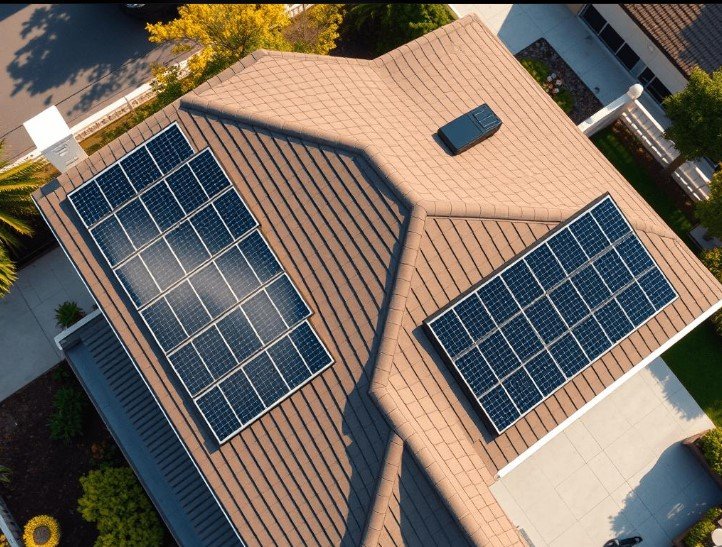
Electricity costs are not the only factor homeowners should consider. Environmental impact is also important when selecting an energy source.
Traditional electricity in the UK comes from a changing combination of renewable and non-renewable generation sources. Its environmental impact depends on the generation mix at the time electricity is produced.
Solar panels generate electricity without burning fossil fuels during operation.
Environmental Benefits of Solar Energy
Reduced Operational Carbon Emissions
Solar PV generates electricity without direct combustion emissions during operation.
Renewable Energy Generation
Sunlight is a renewable energy resource that does not require purchasing fuel for electricity generation.
Reduced Dependence on Fossil Fuel Generation
Generating more electricity from solar can reduce the amount of electricity that needs to be supplied by other generation sources, depending on grid conditions.
Lower Household Electricity-Related Emissions
Using solar electricity instead of grid electricity can reduce a property’s associated operational emissions. The actual reduction depends on the electricity displaced and the wider lifecycle impact of the solar equipment.
According to the Energy Saving Trust, a typical domestic solar installation could save around one tonne of carbon dioxide annually, depending on its location and performance. Energy Saving Trust
Solar panels also have an environmental footprint from manufacturing, transportation, installation and eventual recycling. Nevertheless, they provide an opportunity to generate renewable electricity over many years.
What Factors Affect Solar Panel Savings in the UK?
Not every property receives the same financial benefits from solar panels. Two houses with identical systems can achieve different savings because their energy consumption and installation conditions may differ.
Here are the most important factors.
Roof Direction and Orientation
South-facing roofs generally provide strong solar generation potential in the UK.
However, east-facing and west-facing roofs can also produce useful electricity. East-facing panels tend to generate more electricity in the morning, while west-facing panels can produce more during the afternoon.
Roof Angle and Shading
Roof pitch and shading influence how much sunlight reaches the panels.
Nearby buildings, trees, chimneys and other obstacles can reduce solar generation.
Household Electricity Consumption
A property with high daytime electricity consumption may benefit from using more solar electricity directly.
For example, households with people working from home may be able to run appliances while the solar panels are generating electricity.
Solar Panel Efficiency
Higher-efficiency panels can generate more electricity from a limited roof area, although system performance also depends on orientation, temperature, shading and inverter configuration.
Battery Storage Capacity
A suitably sized battery can increase solar self-consumption, but an oversized battery may add unnecessary costs.
Electricity Tariffs
The price paid for imported electricity and the rate received for exported electricity both affect the financial performance of a solar system.
Geographical Location
Solar generation varies across the UK. Properties in areas with higher solar irradiation may generate more electricity than similar systems in less sunny locations.
The Energy Saving Trust’s published payback estimates based on July 2026 fuel prices range from approximately 9 to 12 years across the locations and occupancy scenarios it examined. These are indicative estimates, not a guarantee for every property. Energy Saving Trust+1
Read More About; What Is the Best Roof Direction for Solar Panels UK?
Is Solar Electricity Reliable Compared with Traditional Electricity?
Reliability is an important consideration for households and businesses.
Traditional grid electricity provides a convenient supply without requiring consumers to monitor weather conditions or solar generation.
Solar panels, on the other hand, produce electricity according to available sunlight.
Solar Electricity During Cloudy Weather
Solar panels can generate electricity on cloudy days, although their output is generally lower than during bright sunlight.
The amount of electricity produced depends on cloud cover, daylight hours, panel orientation and system performance.
Solar Electricity at Night
Solar panels do not generate electricity at night.
Households can use stored battery energy if their system includes suitable storage. Otherwise, they rely on the national grid.
What Happens During a Power Cut?
A standard grid-connected solar inverter generally shuts down during a grid outage to protect utility workers and prevent electricity from being fed into the network.
Some systems can provide backup electricity through a suitably designed battery and backup configuration.
However, not every solar installation includes this capability. Homeowners should discuss backup requirements with their installer before purchasing a system.
Which Option Provides Greater Energy Security?
Traditional electricity offers convenient access to the national network, while solar panels provide an additional source of electricity on the property.
A correctly designed solar and battery system can reduce grid dependence, but it does not automatically provide complete energy independence.
Are Solar Panels Better for Homes or Commercial Properties?
Solar energy is not limited to residential properties. Businesses can also use rooftop solar installations to reduce their dependence on purchased electricity.
The financial benefits may be particularly relevant to organisations that consume substantial electricity during daylight hours.
Solar Panels for Residential Properties
Homeowners can use solar electricity for:
- Household lighting and appliances.
- Washing and cooking equipment.
- Home office electricity.
- Electric vehicle charging.
- Battery storage.
- Other domestic electrical requirements.
Solar Panels for Commercial Properties
Businesses may use solar electricity for:
- Office lighting and equipment.
- Manufacturing machinery.
- Warehouses.
- Retail premises.
- Agricultural buildings.
- Workshops and industrial facilities.
Commercial solar installations can be designed around business electricity demand, available roof space and operating hours.
For businesses with high daytime consumption, using generated electricity directly can help reduce purchased electricity costs.
However, commercial systems require an individual assessment of electricity demand, installation capacity, grid connection requirements and financial objectives.
Advantages and Disadvantages of Solar Panels vs Traditional Electricity
Both electricity options have benefits and limitations. Understanding these differences can help property owners make a more informed decision.
| Factor | Solar Panels | Traditional Electricity |
|---|---|---|
| Initial cost | Higher due to installation | No solar equipment investment |
| Monthly expenditure | Potentially lower | Depends on consumption and tariff |
| Long-term savings | Possible over system lifetime | No personal generation savings |
| Energy availability | Depends on sunlight and system design | Available through functioning grid |
| Maintenance | Equipment requires maintenance | Network maintained by operators |
| Environmental impact | Renewable generation with lifecycle impacts | Depends on electricity generation mix |
| Electricity storage | Optional battery | No household solar storage required |
| Export income | Potentially available | Not normally applicable |
| Energy independence | Partial reduction in grid reliance | Full dependence on grid supply |
Advantages of Solar Panels
- Generate renewable electricity on your property.
- Reduce electricity purchases from suppliers.
- Provide opportunities for long-term savings.
- Allow eligible homeowners to earn export payments.
- Can work alongside battery storage.
- Reduce operational carbon emissions.
- Can be integrated with heat pumps and electric vehicle charging.
Disadvantages of Solar Panels
- Require an initial installation investment.
- Electricity generation changes with weather and seasons.
- Roof suitability can limit installation options.
- Inverters and batteries may require replacement.
- Savings depend on household consumption patterns.
- Battery storage increases initial costs.
- Most grid-connected systems still require an electricity connection.
Advantages of Traditional Electricity
- No separate solar installation investment.
- Convenient electricity supply.
- No responsibility for maintaining generation equipment.
- Suitable for properties where solar installation is impractical.
- Provides electricity when solar panels are not generating.
Disadvantages of Traditional Electricity
- Ongoing electricity bills.
- Exposure to changing electricity tariffs.
- Dependence on the national electricity network.
- Limited control over electricity generation.
- No direct financial return from generating your own electricity.
How to Decide Between Solar Panels and Traditional Electricity
The right choice depends on your property’s condition, electricity consumption, financial position and long-term plans.
Solar panels may be a suitable investment if:
- You own a property with sufficient usable roof space.
- Your roof receives reasonable sunlight.
- You have regular electricity consumption.
- You plan to remain in the property for several years.
- You want to reduce dependence on grid electricity.
- Your expected electricity savings justify the installation cost.
Traditional electricity may remain more practical if:
- Your property has unsuitable roof conditions.
- Your electricity consumption is very low.
- You cannot afford the initial installation investment.
- You plan to move before a reasonable payback period.
- Your property has significant shading or structural limitations.
A Better Option: Combine Solar Panels with Grid Electricity
For many UK properties, the most practical arrangement is not to completely replace traditional electricity.
Instead, homeowners can combine solar generation with a grid connection.
During daylight hours, solar panels supply electricity to the property. When solar generation is insufficient, the household imports electricity from the grid.
A battery can further increase the amount of solar energy available outside daylight hours.
This hybrid approach combines the convenience of grid electricity with the financial advantages of on-site renewable generation.
How Effective Eco Can Help You Switch to Solar Energy
Choosing between solar panels and traditional electricity requires understanding your property’s energy requirements, installation conditions and long-term financial goals.
At Effective Eco, homeowners and businesses can explore renewable energy solutions designed to generate electricity, reduce grid dependence and make better use of available energy resources.
Effective Eco provides solar energy products, equipment supply and installation services across the UK.
Solar Panel Supply and Installation
A suitable solar PV system can help your property generate electricity from sunlight.
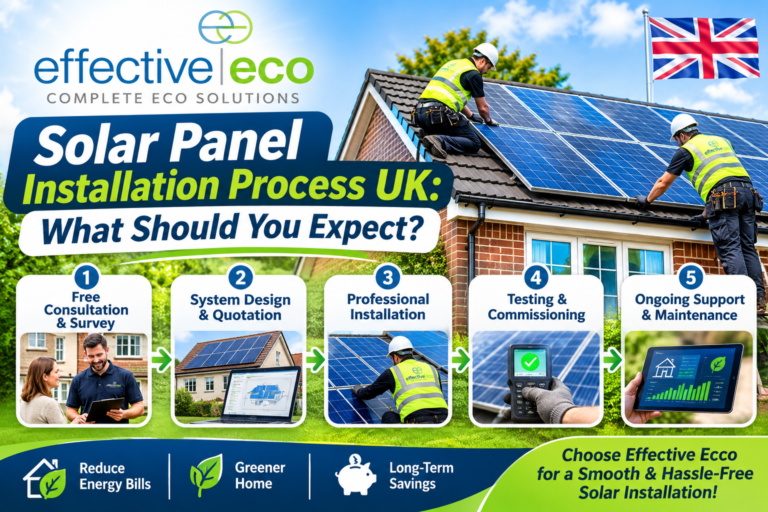
Solar Panel installation process involves assessing your roof, understanding your electricity requirements, selecting suitable solar equipment and installing the system according to the property’s electrical requirements.
Solar Battery Storage Systems
Solar battery storage allows you to store excess electricity generated during the day and use it when solar generation decreases.
The right battery capacity depends on your electricity consumption, solar system size and expected storage requirements.
Solar Inverter Installation
A solar inverter converts electricity generated by solar panels into usable AC electricity.
Selecting an appropriate inverter is important for system performance, monitoring and compatibility with battery storage.
Commercial Solar Installation
Businesses with large roofs and significant daytime electricity consumption may benefit from commercial solar installations.
Effective Eco can help businesses explore solar equipment and installation solutions based on their property requirements.
Solar Monitoring
Solar monitoring systems help property owners track electricity generation and identify changes in system performance.
Monitoring provides useful information about energy production, consumption and overall system operation.
Get Started with Solar Energy
If you are comparing solar panels with traditional electricity, the first step is understanding how much electricity your property consumes and how much solar energy your roof could generate.
Contact Effective Eco to discuss solar panel supply, system design, battery storage and professional installation options for your property.
18. Final Verdict: Are Solar Panels Cheaper Than Traditional Electricity?
When comparing solar panels vs traditional electricity, both options provide important benefits, but their financial structures are different.
Traditional electricity offers convenient access to power without requiring a solar installation investment. However, consumers continue paying for the electricity they purchase from their suppliers.
Solar panels require an upfront investment, but they can generate electricity for many years, reduce grid consumption and provide additional financial benefits through eligible export payments.
For homeowners with suitable roofs, regular electricity consumption and a long-term property plan, solar panels can be a worthwhile investment.
The best approach is to compare the installation cost against realistic electricity savings, export income, maintenance expenses and the expected payback period.
Solar panels are not necessarily the cheapest option for every property, but they can provide greater long-term control over electricity costs and help households transition towards renewable energy.
FAQs
1. Are solar panels cheaper than traditional electricity in the UK?
Solar panels can be cheaper over the long term because they generate electricity on your property and reduce the amount purchased from energy suppliers. However, the initial installation investment and payback period must be considered.
2. How much does it cost to install solar panels in the UK?
A typical domestic solar installation of approximately 4.5 kWp costs around £7,600 according to the Energy Saving Trust. The final price depends on system capacity, roof conditions, equipment and installation requirements. Energy Saving Trust
3. Can solar panels eliminate electricity bills?
Solar panels can significantly reduce electricity bills, but most grid-connected properties still pay standing charges and may need to purchase electricity when solar generation is insufficient.
4. How much can I save annually with solar panels?
Annual savings depend on solar generation, electricity consumption, self-consumption levels and export payments. Households that use more of their generated electricity directly can avoid purchasing more expensive grid electricity.
5. Do solar panels work during cloudy weather?
Yes. Solar panels can generate electricity during cloudy weather, although their output is generally lower than during sunny conditions.
6. Is solar battery storage worth the investment?
Battery storage can be worthwhile for households with high evening electricity consumption or significant surplus solar generation. However, the additional installation cost should be compared with the expected extra savings.
7. Can I sell unused solar electricity back to the grid?
Yes. Eligible solar panel owners in Great Britain can receive payments for exported electricity through the Smart Export Guarantee. Export rates and contract conditions vary between participating suppliers. Ofgem+1
8. How long does it take for solar panels to pay for themselves?
The payback period depends on installation costs, electricity prices, solar generation and export payments. Energy Saving Trust estimates indicate approximately 9–12 years for the locations and scenarios it assessed using July 2026 energy prices. Energy Saving Trust
9. Do solar panels require regular maintenance?
Solar panels generally require relatively little maintenance. However, homeowners should monitor system performance and arrange inspections when necessary. Inverters, batteries and electrical components may require servicing or replacement during the system’s lifetime.
10. Can solar panels power an entire house?
A suitably sized solar system can generate a substantial amount of a household’s electricity requirements. However, generation varies throughout the day and year. Battery storage and grid electricity can help cover periods when solar production is insufficient.