By ahmad
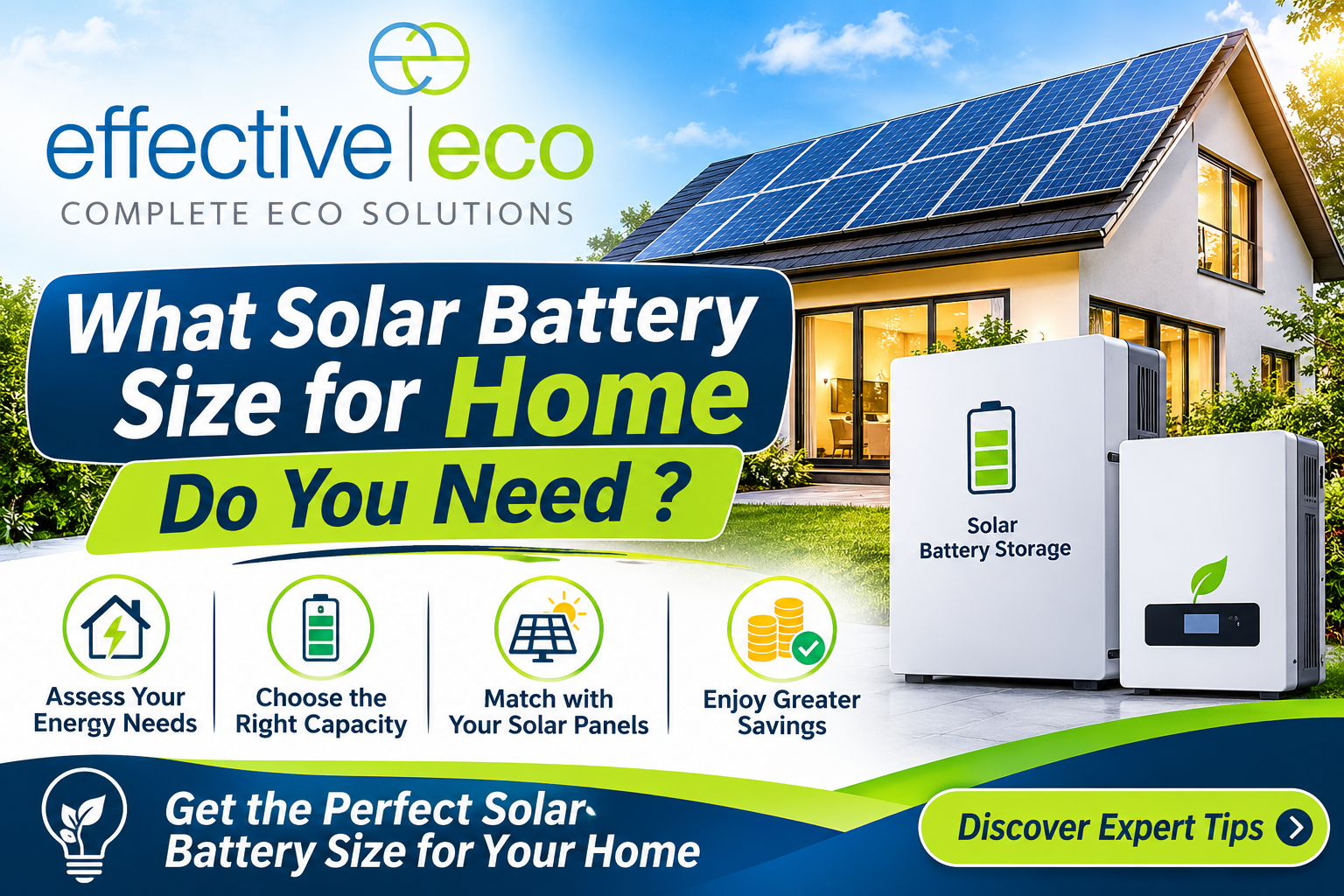
Solar Battery Size for Home
Installing solar panels is an effective way to generate renewable electricity for your home, but what happens when your panels produce more electricity than your household needs? Without battery storage, surplus electricity may be exported to the National Grid rather than stored for later use.
A solar battery allows you to keep some of this excess electricity and use it when your panels are not generating enough power, such as during the evening, overnight or on cloudy days.
However, choosing the correct battery size is essential. A battery with insufficient capacity may leave you relying on grid electricity during peak usage periods, while an oversized system could increase your initial investment without providing enough additional savings.
So, what size solar battery do you need for your home?
For many UK households, a battery with approximately 5kWh to 10kWh of usable storage capacity may be a suitable starting point. However, the right choice depends on your daily electricity consumption, solar panel generation, household size, energy usage patterns and future requirements.
In this article, Effective Eco explains how to calculate the right solar battery capacity, compares different storage options and explores the factors you should consider before installing a home energy storage system.
1. What Is a Solar Battery and How Does It Work?
A solar battery is an energy storage device that stores electricity generated by your solar panels so you can use it when your panels are not producing enough electricity.
During daylight hours, solar panels convert sunlight into electricity. Your home uses the electricity it needs, and any surplus generation can be directed into a compatible battery storage system.
When solar generation decreases, the battery can discharge its stored electricity to power household appliances.
A typical home solar battery storage system works through four main stages:
Stage 1: Solar Electricity Generation
Your solar panels generate electricity during daylight hours. The amount produced depends on sunlight availability, weather conditions, panel capacity, roof orientation and shading.
Stage 2: Powering Household Appliances
The electricity generated by your panels is first used by compatible household electrical loads. This can include lighting, televisions, refrigerators, washing machines and other appliances.
Stage 3: Storing Surplus Electricity
When your solar panels generate more electricity than your home currently requires, the surplus can charge your battery.
The battery stores this electricity for later use rather than requiring you to purchase all your evening electricity from the grid.
Stage 4: Using Stored Electricity
When solar generation falls in the evening or overnight, your battery can discharge and supply electricity to your home.
If the stored energy becomes insufficient, your property can automatically use electricity from the National Grid.
Some compatible systems can also charge batteries using cheaper grid electricity through time-of-use tariffs.
2. What Size Solar Battery Do You Need for Your Home?

The right solar battery size depends mainly on how much electricity your household uses and how much surplus electricity your solar panels generate.
A smaller property with moderate electricity consumption may require less storage than a large household with electric heating, multiple appliances or an electric vehicle.
The following capacities provide useful starting points for comparing residential battery systems:
| Battery capacity | Potential household application |
|---|---|
| 3–5kWh | Smaller homes with relatively low electricity consumption |
| 5–7kWh | Small to medium-sized households |
| 8–10kWh | Medium-sized homes with moderate to higher consumption |
| 10–15kWh | Larger households with higher electricity requirements |
| 15–20kWh | Homes with substantial electricity demand or additional electrical equipment |
| 20kWh+ | High-consumption properties requiring larger storage capacity |
These are indicative capacity ranges rather than fixed recommendations. The ideal system must be matched to your solar generation, electricity consumption and expected battery usage.
Small Homes
Smaller homes often have lower electricity consumption and fewer high-energy appliances.
A battery with around 3kWh to 5kWh of usable capacity may be sufficient for storing some daytime solar surplus and supplying electricity during the evening.
However, even a smaller home may need more storage if it uses an electric vehicle, heat pump or other electricity-intensive equipment.
Medium-Sized Homes
A medium-sized household may benefit from a battery with approximately 5kWh to 10kWh of usable capacity.
This can provide additional storage for electricity generated during sunny periods and help supply household appliances after sunset.
The correct capacity will depend on how much electricity is used during daylight hours compared with the evening and overnight.
Large Homes
Larger properties generally have greater electricity requirements because they may contain more appliances, multiple occupants, electric heating systems and additional electrical equipment.
A battery between 10kWh and 15kWh or more may be worth considering.
However, a large battery should only be selected when sufficient solar generation or suitable low-cost grid charging is available to make practical use of its capacity.
3. How Do You Calculate the Correct Solar Battery Size?
Before selecting a battery, you should understand your household’s actual electricity consumption and solar generation.
Simply choosing a battery based on the number of bedrooms or people in your home can lead to an unsuitable installation.
A more practical approach is to examine your electricity bills, smart meter information and expected solar panel output.
Here are the main steps involved.
Step 1: Calculate Your Daily Electricity Consumption
Start by checking your annual electricity consumption in kWh.
You can usually find this information on your electricity bills or through your energy supplier’s online account.
Divide your annual electricity consumption by 365 to estimate your average daily usage.
Example:
Suppose your household uses 3,650kWh of electricity annually.
3,650 ÷ 365 = 10kWh per day.
This means your household consumes approximately 10kWh of electricity daily.
However, not all this electricity needs to come from your battery. Some consumption will take place during daylight hours when your solar panels are generating electricity directly.
Step 2: Identify Your Evening and Overnight Consumption
A solar battery is particularly useful when electricity is needed after solar generation decreases.
Therefore, you should identify how much electricity your household consumes during the evening and overnight.
For example:
- Daily household consumption: 10kWh.
- Electricity used directly during daylight: 4kWh.
- Evening and overnight consumption: 6kWh.
In this example, approximately 6kWh of electricity may be needed from your battery or the grid after solar generation decreases.
A battery with around 6kWh of usable capacity could be a starting point, provided sufficient surplus solar electricity is available to charge it.
Step 3: Calculate Your Available Solar Surplus
Your solar panels must generate enough excess electricity to charge the battery.
For example, suppose your solar panels generate 16kWh on a particular day, while your household uses 4kWh during daylight hours.
Your available solar surplus would be:
16kWh − 4kWh = 12kWh.
This means up to 12kWh could potentially be available for battery charging before accounting for conversion losses, system limits and other operating conditions.
However, solar generation changes throughout the year. A battery that fills easily during summer may receive much less electricity during winter.
Step 4: Consider Battery Efficiency and Usable Capacity
Not all the electricity entering a battery can be recovered when it discharges.
Some energy is lost during charging, storage and discharging.
For example, a battery with 90% round-trip efficiency requires approximately 5.56kWh of charging electricity to deliver 5kWh of stored electricity.
You should also distinguish between nominal battery capacity and usable battery capacity.
Nominal capacity refers to the battery’s total rated storage, while usable capacity indicates how much electricity the system makes available for normal operation.
When comparing products, always check the manufacturer’s usable capacity rather than relying only on the headline capacity.
Step 5: Match the Battery to Your Household Requirements
The final step is to compare your evening electricity consumption with the surplus electricity your panels can realistically store.
A useful starting principle is:
Practical battery sizing = the lower of your available daily solar surplus and your expected evening and overnight electricity demand.
This is a simplified sizing approach. An installer should also account for seasonal generation, usable capacity, battery power, charging windows, efficiency and any planned grid charging.
The aim is to select a battery that can be used regularly rather than purchasing unnecessary storage capacity.
4. Solar Battery Size Comparison for Different Household Energy Requirements

Different households have different electricity requirements. Comparing battery capacities can help you understand which storage option may be appropriate for your property.
The following examples are illustrative, not guaranteed system recommendations.
| Household example | Daily electricity use | Potential battery capacity |
|---|---|---|
| Small household | 4–6kWh | 3–5kWh |
| Medium household | 6–9kWh | 5–8kWh |
| Larger household | 9–12kWh | 8–12kWh |
| High-consumption home | 12–18kWh | 10–15kWh or more |
Example 1: A Small Household
A household with two occupants may consume approximately 5kWh of electricity daily.
If most daytime electricity requirements are met directly by solar panels, the household may only need a relatively small battery to cover evening usage.
A 3kWh to 5kWh usable battery could be a reasonable starting point for assessment.
Example 2: A Medium-Sized Family
A family living in a three-bedroom property may use electricity for cooking, washing, lighting, entertainment and other household activities.
If the property consumes around 8kWh daily and uses 5kWh after daylight hours, a battery with approximately 5kWh to 8kWh of usable capacity may be worth considering.
Example 3: A Large Household
A larger household with several occupants may use more electricity throughout the day and evening.
If the property consumes around 12kWh daily and has significant evening electricity requirements, a battery with 8kWh to 12kWh of usable capacity could be considered.
The solar installation must also generate enough surplus electricity to charge the battery regularly.
5. What Factors Affect the Solar Battery Size You Need?
Selecting the correct solar battery capacity involves more than calculating your average daily electricity consumption.
Several factors can affect how much energy storage your household needs.
1. Household Electricity Consumption
Your daily electricity consumption is one of the most important factors.
Homes using more electrical appliances, heating systems and equipment generally need more electricity storage than properties with lower consumption.
Reviewing your previous electricity bills can provide a useful starting point for estimating the required battery capacity.
2. Solar Panel System Size
The capacity of your solar panel system affects how much electricity it can generate and how much surplus energy may be available for storage.
For example, a larger solar panel system may generate more electricity than a smaller installation under similar conditions.
However, a larger solar array does not automatically mean you need a larger battery. The battery should be sized according to the surplus generation you can use and your household’s later electricity demand.
3. Roof Orientation and Shading
The direction and angle of your roof can affect solar electricity generation.
South-facing roofs in the UK generally receive favourable sunlight exposure, while east-facing and west-facing systems produce electricity at different times of the day.
Trees, nearby buildings, chimneys and other obstructions may also reduce generation.
Your installer should assess these factors when estimating the amount of surplus electricity available for battery storage.
4. Household Size and Occupancy
The number of people living in your home can influence electricity consumption.
A household with several occupants may use more hot water, kitchen appliances, lighting and electronic equipment.
However, household size alone is not enough to determine the correct battery capacity. Actual electricity consumption is a more reliable measurement.
5. Electric Vehicles
Electric vehicles can significantly increase household electricity consumption.
If you charge your EV at home, you may need to consider how much electricity is used for vehicle charging and whether your solar battery should supply any of that demand.
An EV charger can draw power at a much higher rate than many household appliances, so battery capacity and power output both matter.
In some situations, charging an EV directly from surplus solar generation or using a dedicated off-peak tariff may be more practical than relying entirely on a domestic battery.
6. Air Source Heat Pumps
An air source heat pump uses electricity to provide heating and hot water.
If your home has a heat pump, its electricity consumption should be included when assessing your storage requirements.
Homes using electric heating may require a larger energy storage system, but a battery should not be expected to power an entire heating system overnight without careful capacity and power calculations.
7. Electricity Tariffs
Some UK electricity suppliers offer time-of-use tariffs with different prices at different times of the day.
A compatible battery can store electricity generated by your solar panels and may also charge using cheaper grid electricity.
This can influence the amount of storage that makes financial sense.
8. Future Energy Requirements
Think about any changes you expect to make to your property.
You may be planning to purchase an electric vehicle, install an air source heat pump or increase your household’s electricity consumption.
Considering these requirements before installation can help you select a battery system that offers suitable expansion options.
6. What Is the Difference Between Battery Capacity and Battery Power?

Battery capacity and battery power are two different specifications that homeowners should understand before purchasing a solar storage system.
Although they are related, they describe different aspects of battery performance.
Battery Capacity (kWh)
Battery capacity measures how much electrical energy a battery can store.
For example, a battery with 10kWh of usable capacity can supply 10kWh of energy before reaching its configured discharge limit.
Capacity helps determine how long the battery can supply electricity to your home.
Battery Power (kW)
Battery power measures how quickly the battery can deliver electricity.
For example, a battery with a continuous output of 3kW can supply up to 3kW of power at a given moment, subject to its operating conditions.
This is important when several electrical appliances operate simultaneously.
Why Do Both Specifications Matter?
Imagine you have a battery with 10kWh of usable capacity but a maximum continuous output of 3kW.
It may store enough electricity for several hours of household use, but it cannot necessarily operate multiple high-power appliances simultaneously if their combined demand exceeds its output limit.
When comparing home solar battery storage systems, check both usable capacity and continuous power output.
7. What Are the Different Types of Solar Batteries for Homes?
Residential solar battery systems use different technologies, each with its own characteristics.
Understanding these options can help you compare performance, installation requirements and long-term suitability.
1. Lithium-Ion Batteries
Lithium-ion batteries are widely used in residential energy storage systems because they offer relatively high energy density, good efficiency and a compact design.
They are suitable for many grid-connected solar installations and can store surplus electricity for later household use.
2. Lithium Iron Phosphate (LiFePO4) Batteries
LiFePO4 batteries are a type of lithium-ion battery.
They are increasingly popular for home energy storage because of their thermal stability, long cycle-life potential and suitability for repeated charging and discharging.
Their performance still depends on product quality, temperature, battery management and manufacturer specifications.
3. Lead-Acid Batteries
Lead-acid batteries are an older energy storage technology.
They have historically been used in off-grid solar systems and certain backup power applications.
Although their initial purchase cost can be lower, they are generally heavier and have lower usable capacity and shorter cycle life than many modern lithium-based alternatives.
For many new residential installations, lithium-based systems are worth comparing first.
8. How Much Does a Solar Battery Cost in the UK?
The cost of a solar battery installation depends on its capacity, battery chemistry, manufacturer, inverter compatibility and installation requirements.
The Energy Saving Trust indicates that home battery storage can cost approximately £1,500 to £10,000, with a 5kWh battery system costing around £4,600 as an indicative example.
These figures are reference costs rather than guaranteed quotations. Prices vary according to equipment and installation circumstances.
What Affects Solar Battery Installation Costs?
Battery Capacity: Larger batteries generally cost more because they can store more electricity.
Battery Technology: Different battery chemistries and manufacturers have different prices, performance characteristics and warranty conditions.
Inverter Compatibility: Some installations require a separate battery inverter, while others can use a compatible hybrid inverter.
Installation Complexity: Wiring, consumer unit modifications, electrical protection and battery location can affect the overall installation price.
Monitoring Features: Smart monitoring and energy management functions may be included or offered as additional equipment.
Should You Choose a Larger Battery to Save More Money?
Not necessarily.
A larger battery may store more electricity, but it only provides additional value if there is sufficient surplus energy to charge it and sufficient household demand to use that stored electricity.
For example, installing a 15kWh battery in a property that regularly needs only 4kWh of stored energy may result in unused capacity.
It is usually better to select a battery that matches your real electricity requirements than to pay for storage you rarely use.
9. How Does Battery Storage Help Reduce Electricity Bills?
Solar battery storage can help reduce electricity bills by allowing homeowners to use more of the electricity generated by their solar panels.
Without storage, surplus electricity may be exported to the grid during the day. Later, when solar generation falls, the household may need to purchase electricity from its supplier.
A battery helps manage this difference between electricity generation and consumption.
Increased Solar Self-Consumption
Solar self-consumption refers to the proportion of solar electricity generated by your panels that your household uses rather than exporting.
By storing surplus generation, a battery can increase the amount of solar electricity available for later use.
Reduced Grid Electricity Purchases
Using stored solar electricity in the evening can reduce the amount of electricity your property needs to purchase from the National Grid.
This can be particularly useful when household consumption is higher after sunset.
Better Use of Time-of-Use Tariffs
Some compatible battery systems can also charge from the grid during cheaper periods.
This provides additional flexibility when solar generation is limited, especially during winter.
However, the financial benefit depends on the tariff structure, charging efficiency, export payments and how much electricity your household uses.
10. Is a 5kWh or 10kWh Solar Battery Better for Your Home?
A 5kWh and a 10kWh battery are both common options for residential energy storage, but the right choice depends on your household’s requirements.
| Feature | 5kWh battery | 10kWh battery |
|---|---|---|
| Storage capacity | Smaller | Larger |
| Initial investment | Generally lower | Generally higher |
| Suitable usage | Lower to moderate demand | Moderate to higher demand |
| Evening electricity coverage | More limited | Potentially greater |
| Solar surplus required | Less | More |
| Installation space | Usually less | Usually more |
When Should You Choose a 5kWh Battery?
A 5kWh battery may be appropriate when:
- Your household has relatively low electricity consumption.
- You use most solar electricity during daylight.
- Your evening electricity demand is limited.
- Your solar installation produces a modest amount of surplus electricity.
- You want to keep the initial investment lower.
When Should You Choose a 10kWh Battery?
A 10kWh battery may be worth considering when:
- Your household has higher electricity consumption.
- You regularly use electrical appliances in the evening.
- Your solar panels produce sufficient surplus electricity.
- You have additional electrical equipment.
- You want more storage for future household requirements.
The most suitable option should be selected after reviewing your actual electricity consumption and expected solar generation.
11. Do You Need a Bigger Solar Battery During Winter?
Your solar battery requirements may change throughout the year because solar generation in the UK is seasonal.
During summer, longer daylight hours and stronger solar generation can produce more surplus electricity.
During winter, shorter days, lower sunlight levels and cloudy weather can reduce the amount of electricity your panels generate.
This means a large battery may fill regularly during summer but remain partially charged during some winter days.
Increasing battery capacity does not solve a shortage of solar generation. If your panels produce insufficient surplus electricity, the additional storage may not be used unless you also charge it from the grid.
A suitable system should therefore be assessed using seasonal generation estimates rather than summer performance alone.
12. Can You Expand Your Solar Battery Storage in the Future?
Yes, some residential battery systems allow homeowners to increase their storage capacity by adding compatible battery modules.
This can be useful if your electricity consumption increases after installing an initial battery system.
For example, you may initially install a 5kWh battery and later decide that your household requires more storage after purchasing an electric vehicle or installing a heat pump.
However, not every battery system supports expansion.
Before purchasing, ask your installer about:
- Battery module compatibility.
- Maximum supported storage capacity.
- Inverter charging and discharging limits.
- Battery management system requirements.
- Manufacturer warranty conditions.
- Future installation and equipment costs.
Planning for possible expansion can help avoid replacing an entire battery system when your energy requirements change.
13. What Should You Check Before Installing a Solar Battery?
Choosing a suitable battery involves more than comparing advertised capacities and prices.
Before proceeding with a solar battery installation, review the following considerations.
Usable Battery Capacity
Check how much electricity the battery can actually provide during normal operation.
Round-Trip Efficiency
Compare the amount of electricity stored with the amount that can be recovered after charging and discharging.
Continuous Power Output
Make sure the battery can supply sufficient power for your intended household appliances.
Battery Warranty
Review the warranty period, guaranteed remaining capacity, cycle limits and energy throughput conditions.
Inverter Compatibility
Ensure the selected battery is compatible with your existing or planned inverter and solar installation.
Installation Location
The battery needs a suitable location that meets the manufacturer’s requirements and applicable electrical and fire safety standards.
Backup Power Functionality
If you want electricity during a power cut, check whether the system includes compatible backup equipment and the required electrical configuration.
Installer Qualifications
Use an experienced installer who can assess your property’s electrical system, solar generation and energy consumption before recommending a battery.
14. Why Choose Effective Eco for Solar Battery Storage?
Selecting the right battery system is an important decision for homeowners who want to make better use of renewable electricity.
Effective Eco provides renewable energy solutions, including solar panel supply and installation, battery storage systems and related energy technologies.
Whether you are installing solar panels for the first time or planning to add battery storage to an existing solar system, selecting compatible equipment and the correct storage capacity is essential.
What Can Effective Eco Help You Consider?
When planning a home battery storage system, the following areas should be assessed:
- Household electricity consumption.
- Existing or planned solar panel capacity.
- Available surplus solar generation.
- Suitable battery capacity and technology.
- Battery inverter compatibility.
- Future energy requirements.
- Installation location and electrical requirements.
- Available energy monitoring options.
A properly assessed system can help you use more of your generated solar electricity and manage your household’s reliance on grid energy.
If you are considering a new solar installation or upgrading an existing system, contact Effective Eco to discuss your solar battery storage requirements and explore suitable renewable energy solutions.
Conclusion: What Size Solar Battery Do You Need for Your Home?
The right solar battery size depends on how much electricity your home consumes, how much surplus electricity your solar panels generate and when your household needs stored energy.
For many UK properties, a 5kWh to 10kWh battery provides a useful starting point for comparing residential storage options. Smaller households may need less capacity, while properties with higher electricity consumption, heat pumps or electric vehicles may require larger systems.
However, installing the largest available battery is not always the best decision. The battery should be large enough to meet your realistic energy storage requirements without creating unnecessary installation costs.
Before choosing a system, review your electricity bills, solar generation estimates, evening consumption and future energy plans. An experienced installer can use this information to recommend a suitable battery capacity.
Effective Eco can help you explore solar panel and battery storage solutions designed around your property’s energy requirements, making it easier to plan a practical and efficient home energy system.
Frequently Asked Questions About Solar Battery Size
1. What size solar battery do I need for a 3-bedroom house in the UK?
A 3-bedroom house may need approximately 5kWh to 10kWh of usable battery storage, depending on household electricity consumption, solar panel generation and evening energy requirements. A professional assessment can help determine the correct capacity.
2. Is a 5kWh solar battery enough for a home?
A 5kWh solar battery may be sufficient for a smaller household or a property with moderate evening electricity consumption. However, homes with electric heating, heat pumps or higher electricity demand may require additional storage.
3. Is a 10kWh solar battery enough for a family home?
A 10kWh battery can provide substantial storage for many family homes. Its suitability depends on daily electricity consumption, available solar generation, usable capacity and how much electricity the household needs after sunset.
4. How do I calculate the solar battery size I need?
Start by checking your daily electricity consumption and identifying how much electricity you use during the evening and overnight. Then estimate your available surplus solar generation and account for battery efficiency and usable capacity.
5. How many solar batteries do I need for my house?
The number of batteries depends on the storage capacity of each unit and your household’s total energy requirements. One appropriately sized battery may be sufficient for some homes, while larger properties may require multiple compatible battery modules.
6. What is the difference between 5kWh and 10kWh solar batteries?
A 5kWh battery stores less electricity than a 10kWh battery. The larger system can potentially provide more stored energy for evening and overnight consumption, but it also generally costs more and requires sufficient energy to charge it.
7. Can a solar battery power my entire house?
A solar battery can supply electricity to many household appliances, depending on its capacity, inverter output and electrical configuration. However, powering an entire home, particularly one with electric heating or high-power appliances, may require a larger system.
8. Does a bigger solar battery mean more electricity savings?
Not necessarily. A larger battery only provides additional value when sufficient surplus solar electricity or cheap grid electricity is available to charge it and your household can use the stored energy. An oversized battery may remain underused.
9. Can I install a solar battery without installing solar panels?
Yes. A compatible standalone battery can charge directly from the National Grid. Homeowners can use certain time-of-use electricity tariffs to charge their batteries during cheaper periods and use the stored electricity later.
10. How long does a home solar battery last?
Many residential solar batteries have an expected lifespan of approximately 10 to 12 years, although actual performance depends on battery chemistry, usage, temperature and manufacturer specifications. Always check the warranty before purchasing.
11. Will my solar battery charge during winter?
Yes, your battery can charge during winter whenever your solar panels generate sufficient electricity. However, shorter daylight hours and reduced solar generation may mean it takes longer to reach full capacity.
12. Can I add another battery to my existing solar system?
Yes, some solar battery systems support additional compatible modules. However, expansion depends on the battery manufacturer, inverter capacity, battery management system and warranty requirements.
13. What battery size is best for a home with an electric vehicle?
Homes with electric vehicles may require additional energy storage, but the correct battery size depends on vehicle charging habits, household consumption and solar generation. It is also important to consider the battery’s charging and discharging power.
14. Is lithium iron phosphate a good choice for solar battery storage?
Lithium iron phosphate (LiFePO4) is a popular battery technology for residential storage because of its thermal stability and cycle-life characteristics. Compare usable capacity, efficiency, warranty and manufacturer specifications before choosing a system.
15. Can a solar battery reduce my electricity bills?
Yes. A solar battery can help reduce electricity purchases by storing surplus solar generation for use when your panels are not producing enough electricity. Actual savings depend on your consumption patterns, electricity tariff and battery performance.
16. What happens when my solar battery becomes fully charged?
When your battery reaches its configured maximum charge level, additional surplus solar electricity can be exported to the grid if your system and export arrangement allow it. Your system may also adjust solar generation depending on its configuration.
17. Should I install solar panels and a battery at the same time?
Installing solar panels and battery storage together can simplify system design and installation. It may also reduce duplicated installation work. However, adding a compatible battery to an existing solar system is also possible.