By Effective Eco
How Do Solar Panels Work UK?
Solar energy is becoming an increasingly popular choice for homeowners across the United Kingdom. With growing interest in renewable energy, rising household electricity costs and the need to reduce carbon emissions, more people are considering solar panels as an alternative way to generate electricity for their properties.
However, before investing in a residential solar system, many homeowners have an important question: how do solar panels actually work?
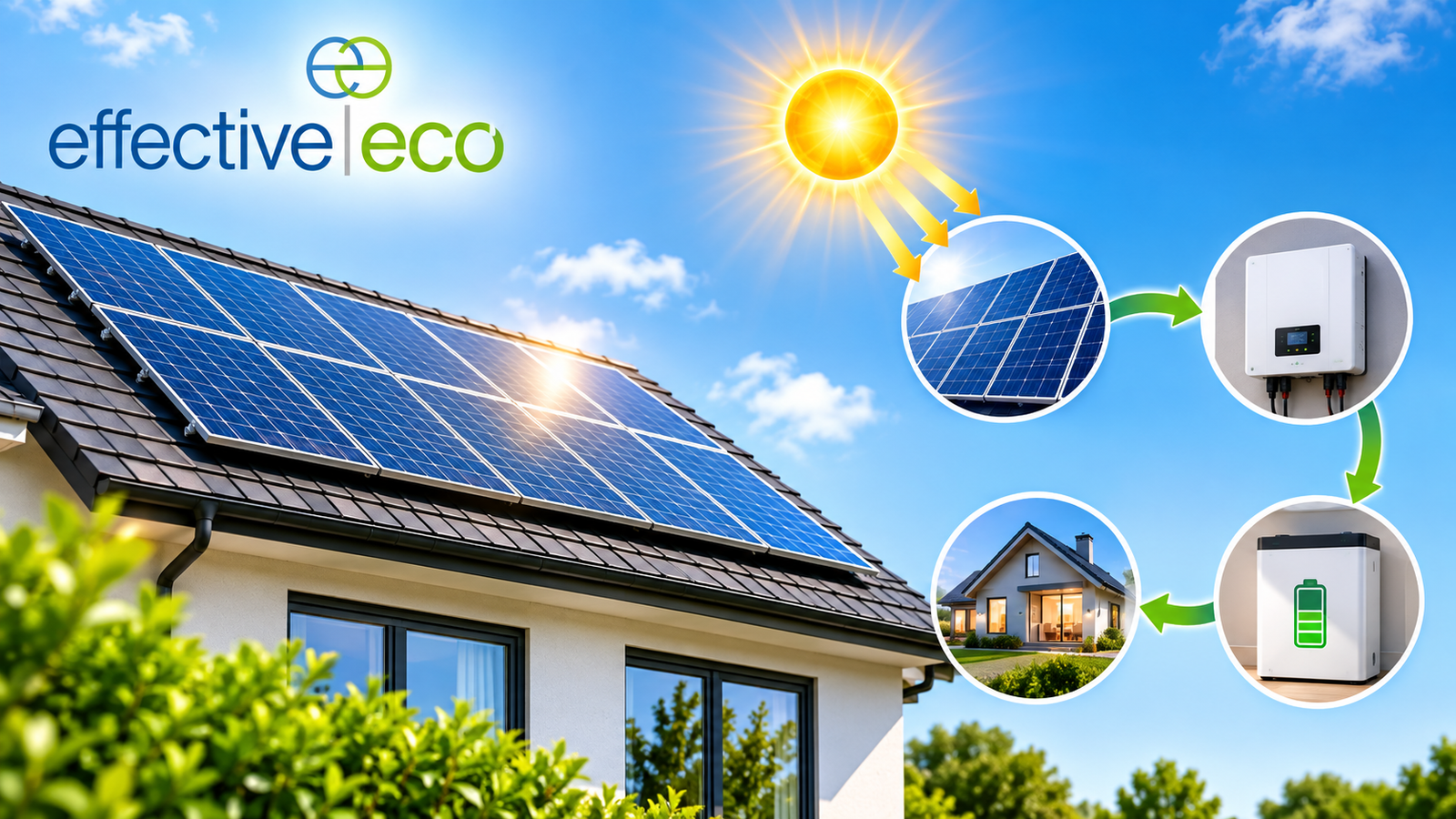
Solar panels use sunlight to generate electricity through a process called photovoltaic conversion. The electricity produced can power household appliances, lighting, heating controls and other electrical equipment. Homeowners can also install battery storage systems to keep unused solar electricity for later use or export surplus power to the National Grid.
Understanding how solar panels work in the UK helps homeowners make informed decisions about system sizes, installation requirements, energy consumption and potential savings.
At Effective Eco, we help homeowners understand renewable energy solutions, including solar panel supply and installation, battery storage systems and other energy-efficient technologies. This article explains how solar panels generate electricity, how different components work together and what UK homeowners should consider before installing a system.
What Are Solar Panels and How Do They Work?
Solar panels are electrical devices that capture energy from sunlight and convert it into usable electricity. Most residential solar panels use photovoltaic (PV) technology, which allows semiconductor materials to produce an electrical current when exposed to light.
The main component of a solar panel is the photovoltaic cell, which is generally manufactured using silicon. Multiple cells are connected together to form a solar module, while several modules installed together create a complete solar panel array.
When sunlight reaches the photovoltaic cells, its energy activates electrons within the semiconductor material. Their movement creates an electrical current that can be collected and converted into electricity for household use.
A typical residential solar PV system UK installation includes:
- Solar photovoltaic panels installed on the roof.
- A mounting structure to secure the panels.
- A solar inverter to convert electricity.
- Electrical protection and isolation equipment.
- A generation monitoring system.
- A connection to the property’s electrical system.
- Optional solar battery storage for unused electricity.
The system works automatically whenever sufficient daylight is available. Homeowners do not need to operate the panels manually or switch between solar and grid electricity.
The electricity generated is used within the property when it is available. If solar production is lower than household demand, electricity can be drawn from the National Grid.
How Do Solar Panels Generate Electricity From Sunlight?
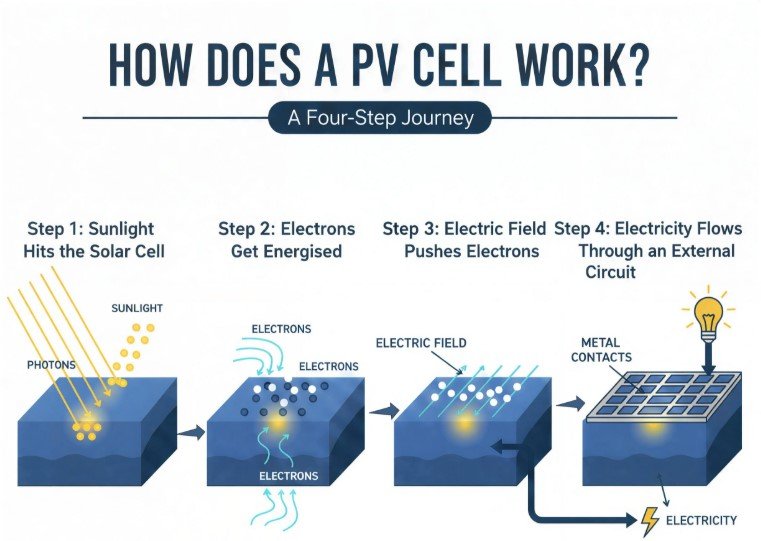
The process of generating electricity starts when sunlight reaches the photovoltaic cells inside a solar panel.
These cells contain semiconductor materials, commonly silicon, which respond to light energy. When photons from sunlight strike the cells, they transfer energy to electrons within the semiconductor.
This process creates an electrical charge and allows electrons to move through an electrical circuit.
Here is how the process works step by step.
Step 1: Sunlight reaches the solar panels
Solar panels are positioned to receive as much daylight as practical. When sunlight reaches the panel surface, photovoltaic cells absorb the available light energy.
Step 2: Photovoltaic cells become energised
The semiconductor material inside the cells absorbs energy from sunlight. This energy allows electrons to move and creates an electrical potential.
Step 3: Electricity is generated
The movement of electrons produces direct current (DC) electricity. This is the initial form of electricity generated by solar panels.
Step 4: Electricity travels to the inverter
The DC electricity passes through electrical connections to the solar inverter. The inverter changes the current into alternating current (AC).
Step 5: Electricity becomes available for household use
The converted electricity is supplied to the property’s electrical system, allowing connected appliances to use the solar-generated power.
This entire process happens continuously while the panels receive daylight. The quantity of electricity produced changes according to sunlight intensity, panel orientation, shading and weather conditions.
What Are the Main Components of a Solar Panel System?
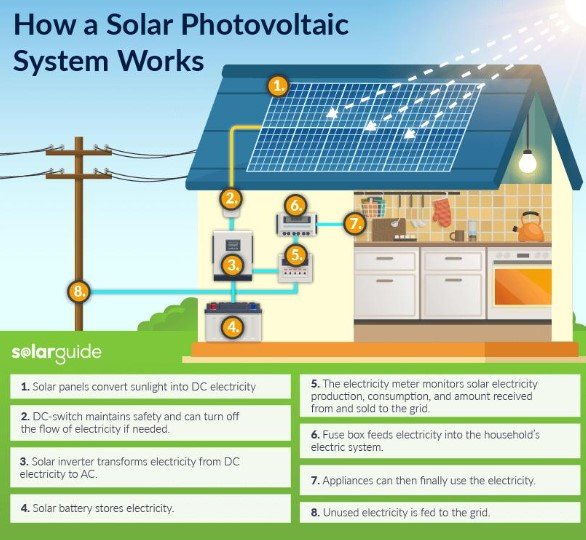
A residential solar installation consists of several components that work together to generate, convert, distribute and monitor electricity.
Understanding these components helps homeowners know what they are paying for when choosing solar panels for homes UK.
Solar Panels
Solar panels are responsible for capturing sunlight and generating DC electricity.
They contain multiple photovoltaic cells protected by layers of glass and other materials. The panels are usually installed on rooftops, although ground-mounted systems are also possible where sufficient space is available.
The number of panels required depends on:
- Available roof space.
- Household electricity consumption.
- Panel wattage and efficiency.
- Roof direction and pitch.
- Shading from trees or nearby buildings.
- The homeowner’s energy requirements.
Solar Inverter
The solar inverter is one of the most important parts of a photovoltaic system.
Solar panels generate direct current, but most household appliances in the UK operate using alternating current. The inverter converts DC electricity into AC electricity so that it can be used throughout the property.
A solar inverter also helps manage system performance and provides important operating and safety functions.
Common inverter options include:
- String inverters.
- Microinverters.
- Hybrid inverters.
The most suitable option depends on the panel layout, roof conditions, shading and whether battery storage is included.
Mounting System
The mounting system securely attaches solar panels to the roof or another suitable installation surface.
It is designed to keep the panels stable while accounting for roof construction, wind exposure, panel positioning and installation requirements.
A suitable mounting arrangement also helps maintain the correct panel angle and orientation.
Electricity Meter
Electricity meters help measure the energy imported from and exported to the electricity network.
Depending on the property’s meter arrangement, an appropriate smart or export meter may be needed to record electricity supplied back to the grid.
Solar Monitoring System
A solar monitoring system allows homeowners to track how much electricity their solar panels generate.
Many modern inverters and monitoring platforms provide information through a mobile application or online dashboard.
Homeowners can monitor:
- Daily electricity generation.
- Monthly solar output.
- Annual energy production.
- Inverter performance.
- Battery charging and discharging.
- Electricity imported from or exported to the grid, where supported.
Monitoring helps identify unusual changes in generation and makes it easier to understand household solar energy consumption.
Read More; How Much Do Solar Panels Cost in UK in 2026?
How Does Solar Electricity Power Your Home?
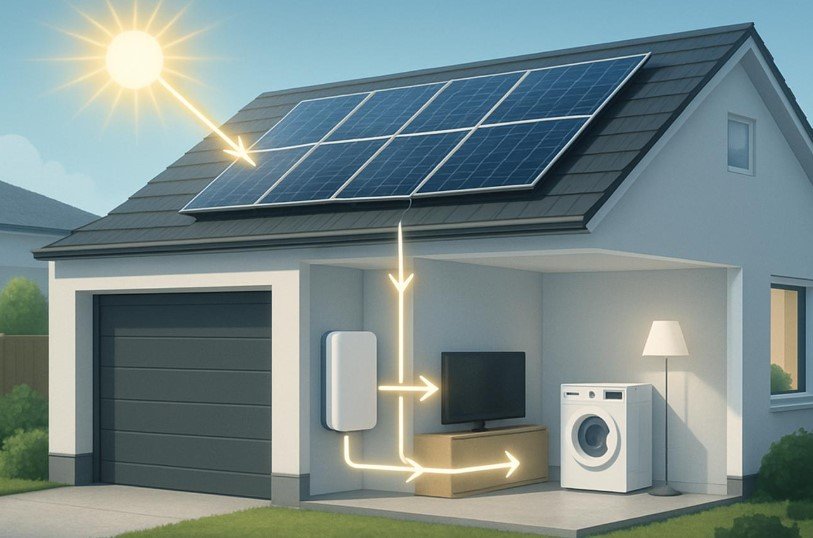
Once the inverter converts DC electricity into AC electricity, the solar-generated power becomes available through the property’s electrical system.
The system automatically supplies electricity to household appliances that are operating at that time.
For example, when solar panels generate electricity during daylight hours, the available power can be used for:
- Refrigerators and freezers.
- Washing machines and tumble dryers.
- Televisions and computers.
- Kitchen appliances.
- Lighting systems.
- Electric vehicle chargers.
- Compatible heating and hot water equipment.
The amount of solar electricity used depends on how much the panels generate and how much energy the household consumes at that moment.
What Happens When Solar Generation Is Higher Than Consumption?
If your solar panels generate more electricity than your home needs, the surplus electricity can be:
- Stored in a compatible battery system.
- Exported to the National Grid.
- Used by compatible appliances or equipment, such as a hot water diverter.
What Happens When Solar Generation Is Lower Than Consumption?
When household demand exceeds solar production, the property automatically draws additional electricity from the grid.
For example, if your home needs 3 kW of electricity but your solar system generates 1.5 kW, the remaining 1.5 kW can come from the National Grid.
This automatic interaction allows homeowners to use solar electricity without changing their normal electrical arrangements.
Do Solar Panels Work During Cloudy and Rainy Weather in the UK?
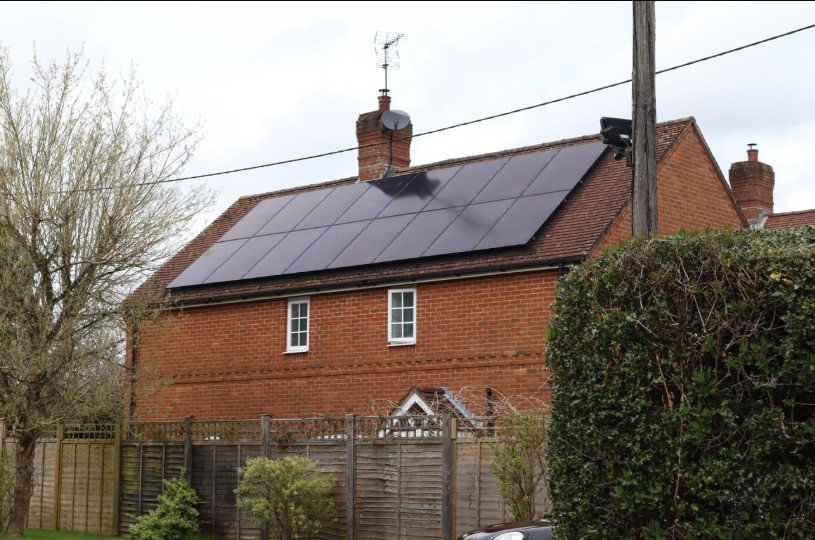
One of the most common concerns among UK homeowners is whether solar panels can generate electricity in cloudy or rainy weather.
The answer is yes.
Solar photovoltaic panels do not require direct sunshine to generate electricity. They can capture diffuse daylight that passes through cloud cover. However, their electricity production generally decreases when sunlight becomes less intense.
The UK’s changing weather conditions mean solar output can vary significantly throughout the year.
Solar Panels During Sunny Weather
Bright sunshine generally provides stronger solar energy, allowing photovoltaic cells to produce more electricity.
However, extremely high panel temperatures can reduce the efficiency of some solar modules.
Solar Panels During Cloudy Weather
Cloud cover reduces the amount of sunlight reaching the panels. Solar electricity generation continues, but output is normally lower than on a clear day.
Solar Panels During Rain
Rain does not stop solar panels from generating electricity as long as daylight reaches the photovoltaic cells.
Rain can also wash away some accumulated dust and dirt from the panel surface.
Solar Panels During Winter
Winter brings shorter daylight hours and generally lower solar generation across the UK.
However, solar panels can still produce electricity during winter days. Their performance depends on daylight availability, shading, temperature and the condition of the system.
The important point is that solar panels work with daylight rather than requiring constant direct sunshine.
How Much Electricity Do Solar Panels Produce in the UK?
The amount of electricity generated by a solar system depends on its installed capacity, panel efficiency and the conditions of the installation site.
Solar systems are commonly measured in kilowatts peak (kWp). This represents the system’s rated maximum power output under standard test conditions.
Actual electricity production is measured in kilowatt-hours (kWh).
For example, a 4 kWp solar installation does not generate 4 kWh every hour throughout the year. Its production changes according to daylight, weather, shading and other factors.
The Centre for Sustainable Energy indicates that UK solar PV systems can typically generate around 700–900 kWh annually per installed kWp, although actual results vary considerably. Centre for Sustainable Energy+1
Illustrative Annual Solar Electricity Production
| Solar System Size | Estimated Annual Generation |
|---|---|
| 2 kWp | 1,400–1,800 kWh |
| 3 kWp | 2,100–2,700 kWh |
| 4 kWp | 2,800–3,600 kWh |
| 5 kWp | 3,500–4,500 kWh |
| 6 kWp | 4,200–5,400 kWh |
These are illustrative estimates using 700–900 kWh per kWp annually, not guaranteed generation figures or individual property forecasts.
Factors That Affect Solar Panel Electricity Production
- Roof Direction: South-facing roofs often receive favourable sunlight exposure across the day. East- and west-facing roofs can also accommodate effective solar installations.
- Roof Angle: The pitch of the roof influences how sunlight reaches the panels throughout the year.
- Shading: Trees, chimneys, neighbouring buildings and other obstructions can reduce electricity production.
- Panel Efficiency: Higher-efficiency panels can generate more electricity from a given roof area, depending on their rated capacity and installation conditions.
- Weather Conditions: Cloud cover, daylight hours and seasonal changes affect solar output.
- System Condition: Damaged panels, electrical faults or inverter problems can affect overall performance.
A professional solar assessment helps estimate the expected annual electricity generation for a particular property.
How Does Solar Battery Storage Work With Solar Panels?
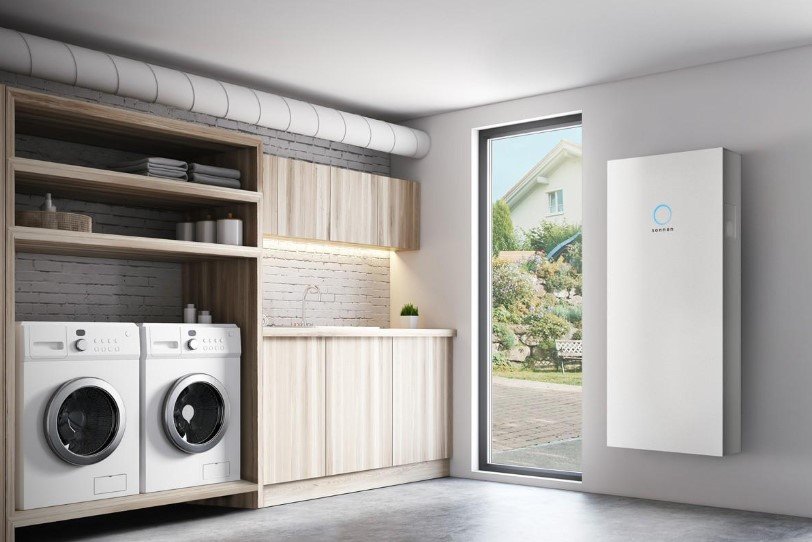
Solar battery storage allows homeowners to store unused solar electricity instead of immediately exporting all surplus power to the National Grid.
Without a battery, excess electricity generated during the day can be exported when the household does not need it.
However, many households consume more electricity during the early morning and evening, when solar generation may be limited.
A battery helps address this difference between electricity generation and consumption.
How a Solar Battery Works
The process generally follows these steps:
- Solar panels generate electricity during daylight hours.
- The inverter manages the available electricity.
- Household appliances use the electricity they need.
- Surplus electricity charges the compatible battery.
- Stored electricity is discharged when household demand increases and solar generation is insufficient.
This allows homeowners to use more of their own solar-generated electricity after sunset.
Benefits of Solar Battery Storage
- Greater Solar Self-Consumption: More of the electricity generated by your panels can be used within your home.
- Evening Electricity Supply: Stored energy can help power appliances when solar production falls.
- Reduced Grid Imports: A battery can reduce the amount of electricity purchased from an energy supplier.
- Better Energy Management: Homeowners can monitor and manage when stored electricity is used.
- Flexible Energy Options: Some systems can work with suitable time-of-use tariffs and controlled charging arrangements.
Is Solar Battery Storage Necessary?
A battery is not essential for every solar installation.
Homeowners who use a significant amount of electricity during daylight hours may already consume much of their solar generation directly.
However, households with high evening electricity consumption may benefit from additional storage capacity.
The right battery size depends on household consumption, solar generation, available space, budget and energy requirements.
At Effective Eco, homeowners can explore solar panel systems alongside suitable battery storage solutions to identify an arrangement that meets their property’s energy needs.
Read More; How Much Does Solar Battery Storage Cost UK in 2026?
What Happens to Excess Solar Electricity? Understanding the Smart Export Guarantee
When a solar PV system generates more electricity than a property consumes or stores, surplus electricity can be exported to the National Grid.
In Great Britain, eligible small-scale renewable electricity generators can receive payments through the Smart Export Guarantee (SEG).
The scheme was introduced on 1 January 2020 and requires participating licensed electricity suppliers to offer payment for eligible electricity exported to the grid. Ofgem+1
How Does the Smart Export Guarantee Work?
The process is relatively straightforward:
- Your solar panels generate electricity.
- Your property uses the electricity it requires.
- Surplus electricity is exported to the grid.
- An appropriate export meter records the exported units.
- Your chosen SEG supplier calculates payments using its agreed tariff.
Can Every Solar Panel Owner Receive SEG Payments?
Not automatically.
Installations must meet the applicable eligibility requirements. These include relevant certification requirements for the installation and installer, as well as suitable metering and other scheme conditions.
Ofgem provides information about participating suppliers and the eligibility criteria.
Why Should Homeowners Compare Export Tariffs?
SEG payment rates, contract conditions and other terms vary between suppliers.
Homeowners should compare available tariffs rather than assuming every provider pays the same amount.
It is also important to consider the value of using solar electricity directly. Electricity purchased from a supplier may cost more per unit than the payment received for exporting surplus generation.
What Types of Solar Panels Are Available for UK Homes?
Different solar panel technologies are available for residential and commercial properties. The most appropriate choice depends on available roof space, performance requirements, appearance and budget.
Monocrystalline Solar Panels
Monocrystalline panels are manufactured using high-purity silicon crystals.
They are commonly recognised by their dark or black appearance and are widely used in residential solar installations.
Key characteristics include:
- Generally high conversion efficiency.
- Good electricity generation per square metre.
- Suitable for properties with limited roof space.
- Modern appearance.
- Multiple wattage and design options.
Polycrystalline Solar Panels
Polycrystalline panels are manufactured using silicon crystals that have been melted and formed together.
They traditionally have a blue appearance and generally offer lower conversion efficiency than comparable monocrystalline panels.
Their use in new residential installations has become less common as higher-efficiency monocrystalline technology has developed.
Thin-Film Solar Panels
Thin-film panels use thin layers of photovoltaic materials deposited onto a supporting surface.
They can be lightweight and flexible, depending on the technology and product design.
However, their lower power density means they may require more installation area to produce the same electricity as conventional crystalline silicon panels.
Which Solar Panel Type Is Best for UK Homeowners?
For many residential properties, monocrystalline panels are a practical option because of their power output and efficient use of available roof space.
However, homeowners should compare actual product specifications, warranties, performance data and installation costs before making a decision.
Read More; Monocrystalline vs Polycrystalline Solar Panels: Which Is Better?
Are Solar Panels Worth Installing on UK Homes?
Solar panels can be a worthwhile investment for homeowners who want to generate their own electricity and reduce their dependence on purchased grid energy.
However, the financial benefits depend on the property’s circumstances.
The amount a household can save depends on:
- Initial installation cost.
- Solar system capacity.
- Annual electricity generation.
- Household electricity consumption.
- Percentage of solar electricity used directly.
- Battery storage capacity, if installed.
- Electricity import and export tariffs.
- Maintenance and equipment replacement costs.
Main Benefits of Residential Solar Panels
Lower Electricity Purchases
Solar electricity can reduce the amount of power a household needs to purchase from its electricity supplier.
Renewable Electricity Generation
Solar panels generate electricity from sunlight without burning fossil fuels during operation.
Greater Energy Independence
Generating electricity at home can reduce reliance on the National Grid, although most grid-connected homes still use imported electricity.
Potential Long-Term Financial Benefits
A properly designed system can provide electricity generation over many years. Actual savings depend on system performance and household energy use.
Compatibility With Other Renewable Technologies
Solar panels can work alongside battery storage, electric vehicle charging systems and compatible heating technologies.
Why Is Professional Solar Installation Important?
A solar system should be designed around the individual property rather than selected solely on the basis of panel quantity or advertised output.
Professional assessment helps determine suitable equipment, roof requirements, electrical connections and expected system performance.
What Should Homeowners Check Before Installing Solar Panels?
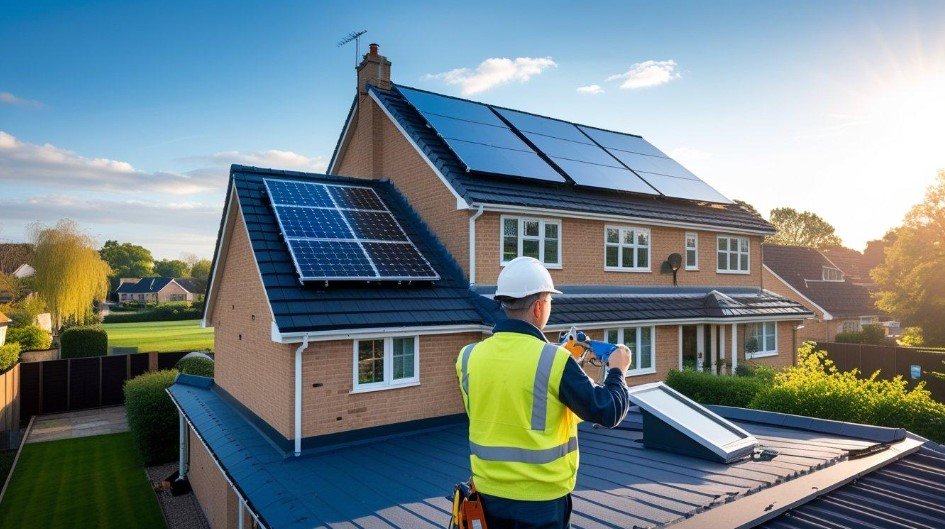
Before arranging a solar panel installation UK project, homeowners should consider several important factors.
Roof Condition
The roof should be structurally suitable and in an appropriate condition to accommodate solar panels.
If major repairs are required, completing them before installation may prevent additional costs later.
Roof Orientation and Available Space
The installer should assess roof direction, pitch, usable area and potential shading.
A south-facing roof can offer favourable generation conditions, but east- and west-facing installations can also be suitable.
Household Electricity Usage
Reviewing electricity bills helps establish how much energy the property consumes and when demand is highest.
This information is useful when selecting the system size.
Inverter and Battery Compatibility
Homeowners considering battery storage should check that the inverter and battery are compatible.
They should also understand whether the system uses AC-coupled or DC-coupled battery technology and what future expansion options are available.
Installation Certification and Compliance
Check that the installer has the appropriate qualifications, certification and experience.
Homeowners should also ask about:
- Product warranties.
- Installation workmanship warranties.
- Electrical safety documentation.
- Grid connection requirements.
- Export tariff eligibility.
- Monitoring arrangements.
- After-installation maintenance.
Planning Permission
Many domestic rooftop solar installations can be carried out under permitted development rights, subject to applicable conditions.
However, the rules can vary according to property type, location, listed-building status and other planning restrictions.
Planning Portal guidance was updated on 27 August 2026, with a transitional period extending to 27 August 2027. Homeowners should check the current rules and consult their local planning authority where necessary. Planning Portal+1
How to Make the Most of Your Solar Panel System
Installing solar panels is only one part of managing household energy efficiently. How and when you use electricity can also affect the financial benefits.
Here are some practical ways to make better use of solar generation.
Run Appliances During Daylight Hours
Where convenient, operate washing machines, dishwashers and other energy-intensive appliances when solar panels are generating electricity.
Use Battery Storage Strategically
A suitable battery can store surplus daytime electricity for evening use. Review its settings and charging schedule to match your energy requirements.
Monitor Your Solar Generation
Use the system’s monitoring application to understand daily production and identify unusual drops in performance.
Consider Electric Vehicle Charging
If you own an electric vehicle, compatible smart charging equipment can help use surplus solar electricity for vehicle charging.
Review Your Energy Tariff
Compare electricity import and export tariffs to understand whether your current energy arrangement makes good use of your solar generation.
Keep Panels in Good Condition
Follow the manufacturer’s and installer’s maintenance recommendations. Check for visible damage or unusual performance changes and arrange professional inspections when needed.
Why Choose Effective Eco for Solar Panel Installation in the UK?
Choosing a suitable renewable energy company Uk is an important part of planning a solar project.
Homeowners need more than photovoltaic panels. They also need an appropriately designed system, compatible equipment, safe electrical connections and installation that meets relevant standards.
Effective Eco provides renewable energy solutions for homeowners and businesses across its UK service areas, with services covering solar panel installation, battery storage systems, air source heat pumps and other energy-efficiency technologies.
Whether you are considering solar panels for the first time or looking to combine solar generation with battery storage, understanding your property’s requirements is the first step.
Effective Eco can help you explore:
- Residential solar panel installation.
- Solar panel system design.
- Solar battery storage Installation.
- Solar inverter Installation systems.
- Solid Wall Insulation
- Renewable energy Solar Monitoring
- Energy-efficient heating solutions.
Every property has different energy requirements. Factors such as roof condition, electricity consumption, available installation space and future energy plans should be considered before choosing a system.
If you are planning to generate electricity from sunlight, contact Effective Eco to discuss a suitable solar energy solution for your property.
Read More About; How Do Solar Panels Work UK?
FAQs
These FAQs target additional long-tail searches and common questions from UK homeowners.
1. How do solar panels work in the UK?
Solar panels use photovoltaic cells to convert sunlight into direct current (DC) electricity. A solar inverter converts this electricity into alternating current (AC), which can power household appliances. Unused electricity can be stored in a battery or exported to the National Grid.
2. Do solar panels work without direct sunlight?
Yes. Solar panels can generate electricity from indirect and diffused daylight. However, their output is generally lower during heavily overcast conditions compared with bright sunshine.
3. Do solar panels work during winter in the UK?
Yes. Solar panels continue generating electricity during winter, provided daylight reaches the photovoltaic cells. However, shorter days and lower sunlight levels generally reduce seasonal energy production.
4. Can solar panels power an entire house?
Yes, a suitably sized solar system can generate a substantial amount of a home’s electricity requirements. However, whether it can meet all household demand depends on system capacity, electricity consumption, weather and battery storage.
5. Do solar panels need batteries to work?
No. Solar panels can operate without battery storage. A battery is an optional addition that stores surplus electricity for use when the panels are producing less power.
6. What happens to unused electricity generated by solar panels?
Unused electricity can be stored in a compatible battery or exported to the National Grid. Eligible homeowners may receive payments through the Smart Export Guarantee.
7. How many solar panels does an average UK home need?
The number depends on the household’s annual electricity consumption, panel wattage, available roof space and expected system generation. A professional assessment is the best way to determine a suitable quantity.
8. Can solar panels work during rainy weather?
Yes. Solar panels can still generate electricity during rain because they use available daylight rather than requiring dry weather. However, heavy cloud cover can reduce their output.
9. How long do residential solar panels last?
Many modern solar panels are designed to operate for 25 years or longer. Their actual service life depends on product quality, installation, environmental conditions and maintenance. Homeowners should check the manufacturer’s performance and product warranties.
10. Can I sell excess electricity from my solar panels in the UK?
Eligible solar panel owners in Great Britain can receive payments for exported electricity through the Smart Export Guarantee. Payment rates and eligibility conditions vary between participating suppliers.
11. Do solar panels work during a power cut?
Most standard grid-connected solar systems automatically shut down during a grid outage for electrical safety. A specially designed battery backup system with suitable isolation equipment may provide electricity to selected circuits during a power cut.
12. Which direction should solar panels face in the UK?
South-facing panels often provide favourable overall generation, but east- and west-facing roofs can also produce useful electricity. The best orientation depends on the roof, shading and household consumption patterns.