By ahmad
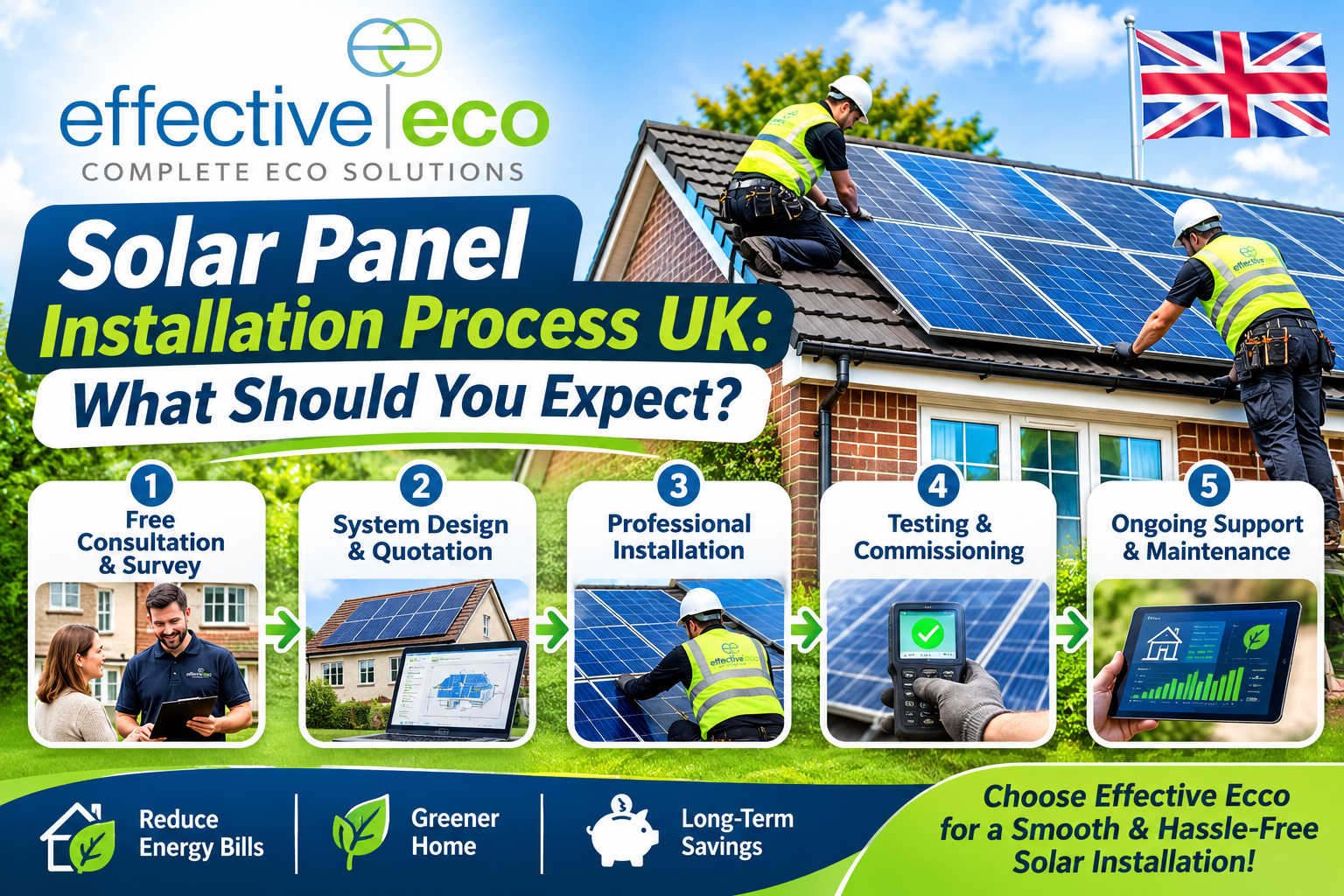
Solar Panel Installation Process UK
Switching to solar energy is an important decision for homeowners and businesses looking to reduce electricity costs and generate their own renewable power. However, before installing a solar system, it is useful to understand how the entire process works, what happens during installation, and what you should prepare in advance.
The solar panel installation process in UK involves several stages, including an initial consultation, property assessment, roof inspection, system design, equipment selection, electrical preparation, panel installation, testing and final handover. Each stage helps ensure that your solar PV system is suitable for your building and household electricity requirements.
Whether you live in a detached house, semi-detached property, bungalow or commercial building, a properly designed solar installation can help you make better use of available sunlight and reduce your reliance on electricity from the National Grid.
At Effective Eco, we provide renewable energy solutions for homes and businesses, including solar panel installation, battery storage systems and solar monitoring. Our approach covers the journey from initial assessment and tailored system design to professional installation and ongoing support.
Let’s look at what happens during each stage of a typical solar installation in the UK.
How Does the Solar Panel Installation Process Work in the UK?
A typical residential solar installation follows a structured process to make sure the system meets your energy requirements and property conditions.
Here are the main stages:
- Initial consultation and energy requirements assessment.
- Property and roof suitability survey.
- Solar system design and equipment selection.
- Quotation, approvals and installation planning.
- Solar panel mounting and installation.
- Inverter, battery and electrical connections.
- System testing and commissioning.
- Documentation, handover and system monitoring.
The exact requirements and timescale depend on your property, roof condition, equipment, electrical setup and any necessary network approvals.
Step-by-Step Solar Panel Installation Process
Step 1: Initial Consultation and Energy Requirements Assessment
The first step is to discuss your energy requirements with a professional solar installation company. This conversation helps establish whether solar panels are suitable for your property and what type of system may work best.
During the initial consultation, the installer may ask about:
- Your average monthly electricity bills.
- Annual household electricity consumption.
- Number of occupants in your property.
- Your typical daytime and evening electricity usage.
- Existing heating and electrical appliances.
- Plans to purchase an electric vehicle.
- Whether you want to include battery storage.
- Your expected budget and installation preferences.
Understanding your electricity consumption is important because the number of solar panels should be based on your actual energy requirements rather than simply installing as many panels as possible.
For example, a household that uses electricity throughout the day may benefit from a different system configuration than a property where most electricity is consumed during the evening.
During this stage, you can also ask about solar panel installation costs in the UK, available payment options, warranties and possible export tariff arrangements.
At Effective Eco, the initial consultation provides an opportunity to discuss your property, energy goals and the renewable energy solutions that may be suitable.
Step 2: Property Assessment and Roof Suitability Survey

After the initial discussion, the next stage is a detailed property assessment. This is one of the most important parts of the solar PV installation process because the condition and structure of your roof can influence system design, installation requirements and expected electricity generation.
A professional installer assesses several factors before recommending a solar panel layout.
Roof orientation
The direction your roof faces affects how much sunlight your solar panels receive throughout the day. South-facing roofs are often favourable in the UK, but east-facing and west-facing roofs can also produce useful electricity.
Roof pitch
The angle of your roof influences sunlight exposure and panel positioning. The installer considers the existing roof pitch when planning the mounting arrangement.
Roof condition
Your roof should be structurally suitable for supporting the proposed solar equipment. The survey may identify damaged tiles, ageing materials or repairs that should be completed before installation.
Shading assessment
Nearby trees, chimneys, neighbouring buildings and other obstacles can create shadows over solar panels. These shaded areas may affect electricity production and influence panel placement.
Available roof space
The installer measures the available area to determine how many panels can be fitted safely while maintaining suitable access and spacing.
Electrical inspection
The property’s existing electrical installation, consumer unit and proposed inverter location are also considered. Any necessary electrical upgrades should be identified before the installation date.
A roof survey helps prevent unsuitable equipment selection and unexpected installation issues. It also allows the installer to recommend a layout that makes practical use of your available roof space.
Read More About; What Is the Best Roof Direction for Solar Panels UK?
Step 3: Solar System Design and Equipment Selection

Once the property assessment is complete, the installer prepares a solar system design based on the building’s characteristics and electricity requirements.
The objective is to create a system that balances electricity generation, equipment compatibility, available space and installation costs.
A typical solar panel system installation includes several components.
1. Solar photovoltaic panels
Solar panels capture sunlight and convert it into direct current (DC) electricity. Their output, efficiency, dimensions and quantity influence the overall system capacity.
2. Solar inverter
The inverter converts the DC electricity generated by the solar panels into alternating current (AC), which can be used by household electrical appliances.
Depending on the system design, an installer may recommend a string inverter, microinverters or power optimisers.
3. Mounting system
The mounting structure secures the solar panels to the roof. Its design depends on the roof type, construction and selected equipment.
4. Solar battery storage
A battery stores surplus solar electricity for use when the panels are generating less power, such as during the evening. Battery storage is optional, but it can help households make greater use of their own generated electricity.
5. Electrical protection equipment
Appropriate isolators, protection devices, cables and other electrical components are selected to ensure safe operation and compliance with applicable standards.
The final design should explain the proposed system capacity, panel arrangement, inverter specifications, expected annual generation and whether battery storage is included.
It should also explain the estimated electricity you may use directly, the potential surplus available for export and the assumptions behind projected savings.
Step 4: Quotation, Approvals and Installation Planning
Once the solar system design has been prepared, you should receive a written quotation outlining the proposed installation.
Before accepting the quotation, check that it clearly identifies:
- Number and model of solar panels.
- Total solar PV system capacity.
- Inverter manufacturer and model.
- Battery capacity, if included.
- Mounting equipment and electrical components.
- Scaffolding and installation costs.
- Estimated electricity generation.
- Product and workmanship warranties.
- Installation schedule and payment terms.
- Any additional work or potential charges.
Do you need permission to install solar panels in the UK?
In many cases, domestic solar panels can be installed under permitted development rights, meaning a separate planning application is not normally required.
However, certain restrictions may apply, particularly to listed buildings, conservation areas and properties subject to specific planning conditions. You should confirm the relevant requirements with the installer and local planning authority before work begins.
There may also be electrical network requirements.
For example, the installer must establish whether the proposed solar PV system falls under the G98 notification process or requires prior G99 approval. The applicable route depends on the system and connection characteristics. Where prior approval is required, it must be obtained before installation.
Your installer should coordinate the relevant network arrangements with the local Distribution Network Operator (DNO).
This planning stage helps avoid delays and ensures that the installation is ready to proceed.
Read More About; How Much Do Solar Panels Cost in UK in 2026?
Step 5: Preparing the Roof and Installing the Mounting System

Before solar panels are fitted, the installation team prepares the roof and working area.
For many residential properties, this involves arranging suitable scaffolding and safety equipment to provide secure access to the roof.
The installers then prepare the designated roof sections and fit the solar panel mounting system.
The process generally involves:
- Identifying the agreed panel positions.
- Locating suitable roof fixing points.
- Securing roof brackets or mounting anchors.
- Installing mounting rails.
- Checking alignment and fixing security.
- Preparing the mounting structure for the panels.
The mounting equipment must be appropriate for the roof construction and the manufacturer’s installation requirements.
For tiled roofs, fixing methods are different from those used on metal or flat roofs. The installer must also take account of weather exposure, roof loading and waterproofing details.
Proper mounting is essential because it provides the structural foundation for the entire residential solar panel installation.
Step 6: Solar Panel Installation and Positioning
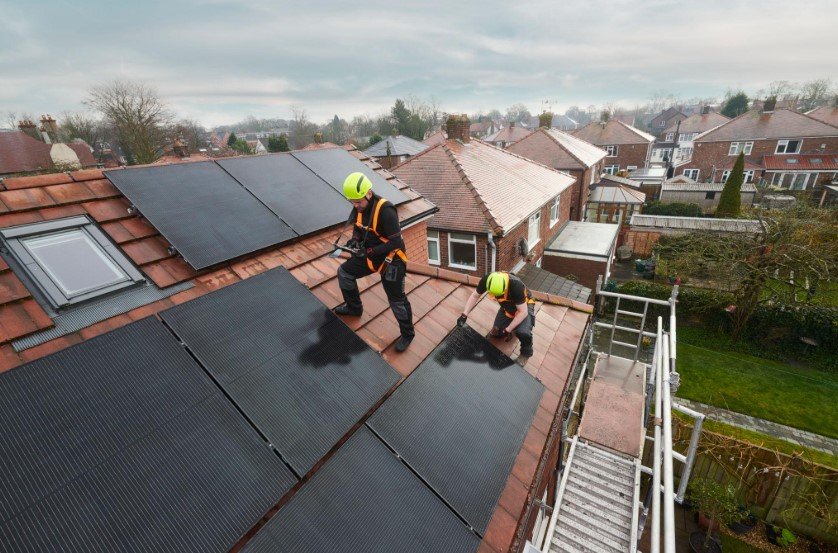
After the mounting structure is secured, the installers position the solar panels on the roof.
Each panel is carefully lifted, aligned and attached to the mounting rails using the appropriate fixing equipment.
The installation team follows the approved panel layout to maintain suitable spacing, alignment and ventilation.
During this stage, installers also connect the panels using the designed electrical configuration.
The positioning of solar panels is important because it can influence how effectively the system captures available sunlight.
For example:
- South-facing panels can receive strong sunlight exposure across much of the day.
- East-facing panels can generate more electricity during the morning.
- West-facing panels can produce more electricity during the afternoon.
- Multiple roof orientations may be combined where the system design allows.
The best layout depends on the roof’s characteristics rather than a single direction being suitable for every property.
Once the panels are secured, the installer checks the mechanical fixings and electrical connections before proceeding to the next stage.
Read More About; How Much Do Solar Panels Cost in UK in 2026?
Step 7: Solar Inverter Installation and Electrical Connections

Solar panels generate DC electricity, but most household appliances use AC electricity. This is why the inverter is an essential part of the system.
The inverter is usually installed in a suitable location, such as a garage, utility room or another agreed area with appropriate environmental conditions.
The installation team connects the solar panel array to the inverter through the designed DC cabling.
The inverter then converts the generated electricity into a form that can be used by the property’s electrical system.
The electrical work may include:
- DC cable connections.
- AC cable connections.
- Isolation switches.
- Appropriate circuit protection.
- Connection to the consumer unit.
- Earthing and bonding where required.
- Electrical testing and verification.
All electrical work should be carried out by appropriately qualified professionals in accordance with applicable electrical safety requirements.
Your installer should explain the inverter location, how the equipment operates and any access requirements for future servicing.
Step 8: Solar Battery Storage Installation (If Required)

Some homeowners choose to add solar battery storage as part of their installation.
A battery stores electricity produced by the solar panels when generation exceeds immediate household demand. The stored energy can then be used later when solar production decreases.
For example, during a sunny afternoon, your solar panels may generate more electricity than your household currently needs. Instead of exporting all the surplus electricity, a compatible battery can store some of it for evening use.
The battery installation process usually involves:
- Selecting a suitable battery capacity.
- Identifying an appropriate installation location.
- Checking inverter and battery compatibility.
- Installing the battery mounting or floor-standing equipment.
- Completing the electrical connections.
- Configuring the battery management system.
- Testing charging and discharging functions.
Battery capacity should be selected according to household electricity consumption, solar generation and expected usage patterns.
Not every property requires battery storage. A professional assessment can help establish whether the additional equipment is appropriate for your energy goals.
It is also important to understand that a standard battery does not automatically provide electricity during a power cut. Backup functionality requires compatible equipment and a correctly configured backup or islanding arrangement.
Read More About; How Much Does Solar Battery Storage Cost UK in 2026?
Step 9: System Testing and Commissioning
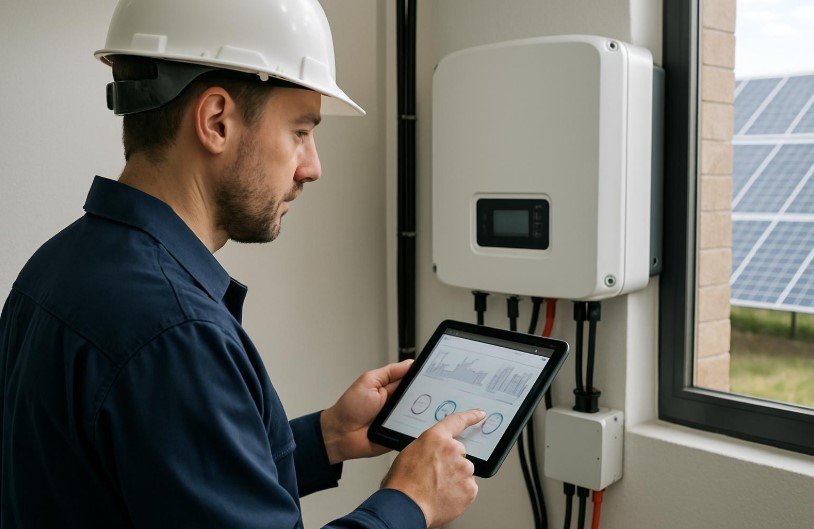
Once all solar panels, inverters, electrical connections and optional battery equipment have been installed, the system must be inspected, tested and commissioned.
Commissioning confirms that the equipment has been installed correctly and operates according to its design.
The installer may carry out several checks, including:
- Solar panel electrical connections.
- DC and AC voltage measurements.
- Electrical protection checks.
- Inverter operation.
- System configuration.
- Battery charging and discharging.
- Monitoring system connectivity.
- Safety and isolation checks.
- Grid connection requirements.
The installer should also verify that the system is generating electricity and that the monitoring equipment is reporting relevant performance information.
The system should only be placed into normal operation once the required safety checks and connection procedures have been completed.
Step 10: Documentation, Handover and Solar Monitoring

The final stage is the handover. This is where you receive the information needed to understand, operate and maintain your new solar system.
Your installer should explain how to use the inverter and any battery storage equipment, how to access the monitoring application and what to do if the system displays a fault.
Depending on the installation and applicable certification requirements, you should receive relevant documentation such as:
- Solar PV system design information.
- MCS certificate, where applicable.
- Electrical Installation Certificate or relevant electrical certification.
- DNO notification or approval records.
- Equipment manuals.
- Product and workmanship warranties.
- Commissioning and test records.
- Monitoring system access details.
- Maintenance and safety instructions.
If you want to receive payments for surplus electricity exported to the grid, you can also explore the Smart Export Guarantee (SEG).
The SEG allows eligible small-scale renewable electricity generators to receive payments from participating electricity suppliers for electricity exported to the grid. Eligibility and supplier requirements apply.
Your installer should explain the documentation you need and help clarify the next steps.
At Effective Eco, the installation journey includes a system handover so you can understand your equipment and monitor its performance.
How Long Does Solar Panel Installation Take in the UK?
The time required for a solar panel installation depends on the size of the system, roof accessibility, electrical requirements and any necessary approvals.
For a typical domestic property, the physical installation of solar panels and associated equipment may take approximately one to two days. However, the complete process, including consultation, surveys, design and approvals, takes longer.
Here is an approximate breakdown:
| Installation stage | Estimated time |
|---|---|
| Initial consultation | 1 day |
| Property assessment | 1–3 days to arrange |
| System design and quotation | 2–5 working days |
| Permissions and grid approvals | Depends on requirements |
| Scaffolding and preparation | 0.5–1 day |
| Solar panel installation | 1–2 days |
| Testing and commissioning | Same day or additional time |
| Handover and documentation | After commissioning |
These are indicative planning estimates, not guaranteed deadlines. Grid approval, equipment availability and property conditions can affect the schedule.
A larger commercial solar installation may require additional planning, electrical work and installation time.
Effective Eco discusses the installation schedule with customers before work begins so that property owners understand the expected arrangements. Supply, Installation & Renewable Energy+1
Read More About; How Long Do Solar Panels Last UK
What Factors Affect the Solar Panel Installation Process?
Not every property has the same installation requirements. Several factors can influence the complexity, duration and overall cost of a solar PV project.
Roof Type and Condition
The roof material determines which mounting equipment and fixing methods are suitable. Older roofs may require repairs before solar panels can be installed.
Number of Solar Panels
A larger solar array requires more mounting equipment, electrical connections and installation work. The number of panels also depends on available roof space and the property’s electricity consumption.
Roof Direction and Shading
Roof orientation and nearby obstructions influence solar generation. Properties with multiple roof directions may require a different panel arrangement or additional equipment.
Electrical System Requirements
Older consumer units, existing electrical installations and the proposed inverter configuration can affect the electrical preparation required.
Battery Storage Requirements
Adding a battery introduces additional equipment, wiring and configuration requirements. Its installation must also be considered when assessing the system’s grid connection arrangements.
Planning and Network Approvals
Properties with planning restrictions or solar systems requiring prior DNO approval may experience additional preparation time.
Understanding these factors before installation helps homeowners make informed decisions and reduces the likelihood of unexpected changes during the project.
Read More About; Monocrystalline vs Polycrystalline Solar Panels: Which Is Better?
Do Solar Panels Work Effectively in the UK Weather?
Yes. Solar panels can generate electricity throughout the year in the UK, including during cloudy weather.
Solar photovoltaic panels use daylight rather than requiring direct, intense sunshine to produce electricity. However, their output changes according to sunlight availability, season, temperature, roof orientation and shading.
Here is how solar panels generally perform during different seasons:
| Season | Solar panel performance |
|---|---|
| Spring | Increasing daylight and generally stronger generation |
| Summer | Longer daylight hours and often the highest generation |
| Autumn | Reduced daylight and changing weather conditions |
| Winter | Lower generation due to shorter days and weaker sunlight |
Solar panels can also operate in colder temperatures, and their electrical efficiency may benefit from cooler operating conditions.
However, shorter winter days usually mean less total electricity generation than during summer.
A properly designed solar energy system in the UK should take seasonal generation differences into account when estimating annual electricity production.
Should You Install Solar Panels With Battery Storage?
Whether you should install solar panels with a battery depends on how and when you use electricity.
Solar panels generate electricity during daylight hours, but many households consume a significant amount of electricity in the evening.
A battery can help bridge this difference by storing surplus electricity for later use.
Benefits of combining solar panels with battery storage:
- Store surplus solar electricity.
- Use stored energy during evening hours.
- Reduce reliance on imported grid electricity.
- Make better use of your solar generation.
- Potentially reduce electricity costs.
- Monitor battery charging and discharging through compatible software.
When might battery storage be suitable?
Battery storage may be worth considering if your household uses substantial electricity after sunset, has suitable daytime solar generation or wants to manage electricity consumption around time-of-use tariffs.
However, the additional purchase and installation cost should be compared with the potential savings.
Effective Eco provides both solar panel installation and battery storage systems, allowing homeowners to consider an integrated renewable energy solution. Supply, Installation & Renewable Energy+1
What Should You Prepare Before Solar Panel Installation?
Preparing your property before installation can make the process easier for both homeowners and installers.
Here are some useful things to arrange:
- Check roof condition: Address any known leaks, damaged tiles or structural concerns.
- Clear the installation area: Remove unnecessary items from the areas where installers will work.
- Confirm equipment locations: Discuss where the inverter and battery will be installed.
- Provide electricity information: Keep recent electricity bills available for the system assessment.
- Arrange property access: Make sure installers can access the relevant areas safely.
- Discuss cable routes: Confirm how electrical cables will be routed through the property.
- Understand the quotation: Review equipment specifications, warranties and additional charges.
- Confirm approvals: Ask who is responsible for planning checks and DNO applications.
It is also useful to discuss your future electricity requirements. For example, if you plan to purchase an electric vehicle or install an electric heating system, this may influence your solar system design.
Why Choose Effective Eco for Solar Panel Installation in the UK?
Choosing the right installation company is just as important as selecting the solar panels themselves. A suitable installer should understand your property’s requirements, recommend compatible equipment and carry out the installation in accordance with relevant UK standards.
Effective Eco provides renewable energy and property efficiency solutions for residential and commercial customers across England.
Our services include:
Solar Panel Installation
Solar Panel Installation tailored solar PV systems designed to generate renewable electricity for homes and businesses.
Battery Storage Systems
Battery Storage Systems that help property owners use surplus solar electricity when required.
Air Source Heat Pumps
Air Source Heat Pumps installation renewable heating systems designed to extract heat from outdoor air for domestic heating and hot water.
Solid Wall Insulation
Solid Wall Insulation Internal and external insulation solutions designed to reduce heat loss and improve building energy efficiency.
Solar Monitoring
Solar Monitoring solutions that allow customers to track solar generation and system performance.
Commercial Solar Installation
Commercial Solar Installation solar PV solutions for warehouses, offices, factories and other commercial properties.
Effective Eco highlights its MCS certification, TrustMark registration and PAS 2035 compliance as part of its commitment to quality and professional renewable energy services. Supply, Installation & Renewable Energy+1
Our team can help you understand your property’s requirements, assess suitable renewable energy options and plan an installation that matches your energy goals.
Ready to explore solar panel installation for your property?
Contact Effective Eco to discuss your requirements and request a free, no-obligation consultation.
- Website: Effective Eco
- Phone: 07934 760790
- Email: info@effectiveeco.com
FAQs
1. What is the process of installing solar panels in the UK?
The process typically involves an initial consultation, property assessment, roof survey, solar system design, quotation, necessary approvals, mounting installation, panel fitting, inverter connections, testing and final handover.
2. How long does it take to install solar panels on a UK house?
A typical domestic solar panel installation takes around one to two days for the physical installation. However, the complete process can take several weeks depending on survey arrangements, equipment availability and required approvals.
3. Do I need planning permission for solar panels in the UK?
Most standard domestic solar installations fall under permitted development rights. However, restrictions can apply to listed buildings, conservation areas and properties with specific planning conditions. Always check the relevant local requirements.
4. How many solar panels do I need for my house?
The number depends on your annual electricity consumption, available roof space, panel wattage, shading and expected energy generation. A professional property assessment helps determine the appropriate system size.
5. Can solar panels be installed on any roof?
Solar panels can be fitted to many different roof types, including tiled, slate, metal and suitable flat roofs. However, structural condition, roof pitch, available space and mounting requirements must be assessed first.
6. Do solar panels work during cloudy weather?
Yes. Solar panels generate electricity from daylight, so they can still work during cloudy conditions. However, electricity production is generally lower than during bright, sunny weather.
7. Is battery storage necessary when installing solar panels?
No. Battery storage is optional. You can install a solar PV system without a battery and use generated electricity directly or export surplus electricity to the grid. A battery can help store excess generation for later use.
8. What happens after solar panels are installed?
After installation, the system undergoes electrical testing and commissioning. Your installer should provide the relevant certificates, equipment manuals, warranties and monitoring access, along with guidance on operating the system.
9. Can I receive payments for excess solar electricity?
Yes. Eligible solar PV owners can receive payments for exported electricity through the Smart Export Guarantee. You must meet the requirements of a participating electricity supplier and its export tariff.
10. How do I choose a reliable solar panel installation company in the UK?
Check the company’s relevant MCS certification, experience, product specifications, insurance, warranties, installation standards and customer reviews. Ask for a detailed quotation and confirm who will manage electrical certification and DNO notifications.
11. Can I install solar panels and a battery at the same time?
Yes. Solar panels and compatible battery storage systems can be installed together. This allows the system to be designed around both electricity generation and storage requirements.
12. Do solar panels require regular maintenance?
Solar panels generally require relatively little maintenance. However, occasional inspections, monitoring checks and professional assessments can help identify electrical faults, equipment problems or performance issues.
13. What is the difference between solar panels and solar PV systems?
Solar panels are the modules that capture sunlight and generate DC electricity. A solar PV system includes the panels, inverter, mounting equipment, electrical connections and other components required to generate and use solar electricity.
14. Will solar panels work during a power cut?
A standard grid-connected solar system normally shuts down during a power cut for electrical safety. A system with compatible battery backup and an appropriate islanding arrangement may provide electricity to selected circuits during an outage.
15. Can I add battery storage to existing solar panels?
In many cases, yes. However, battery compatibility, inverter configuration, electrical capacity and network connection requirements should be checked before adding storage.